
What Makes a Riding Holiday Ethical
A riding holiday is not a leisure product but an operational system. Ethics are determined by horse welfare, logistics, rider management, and restraint, not scenery. In environments like Sri Lanka, weak systems fail quickly. Responsible riding demands discipline, not volume.

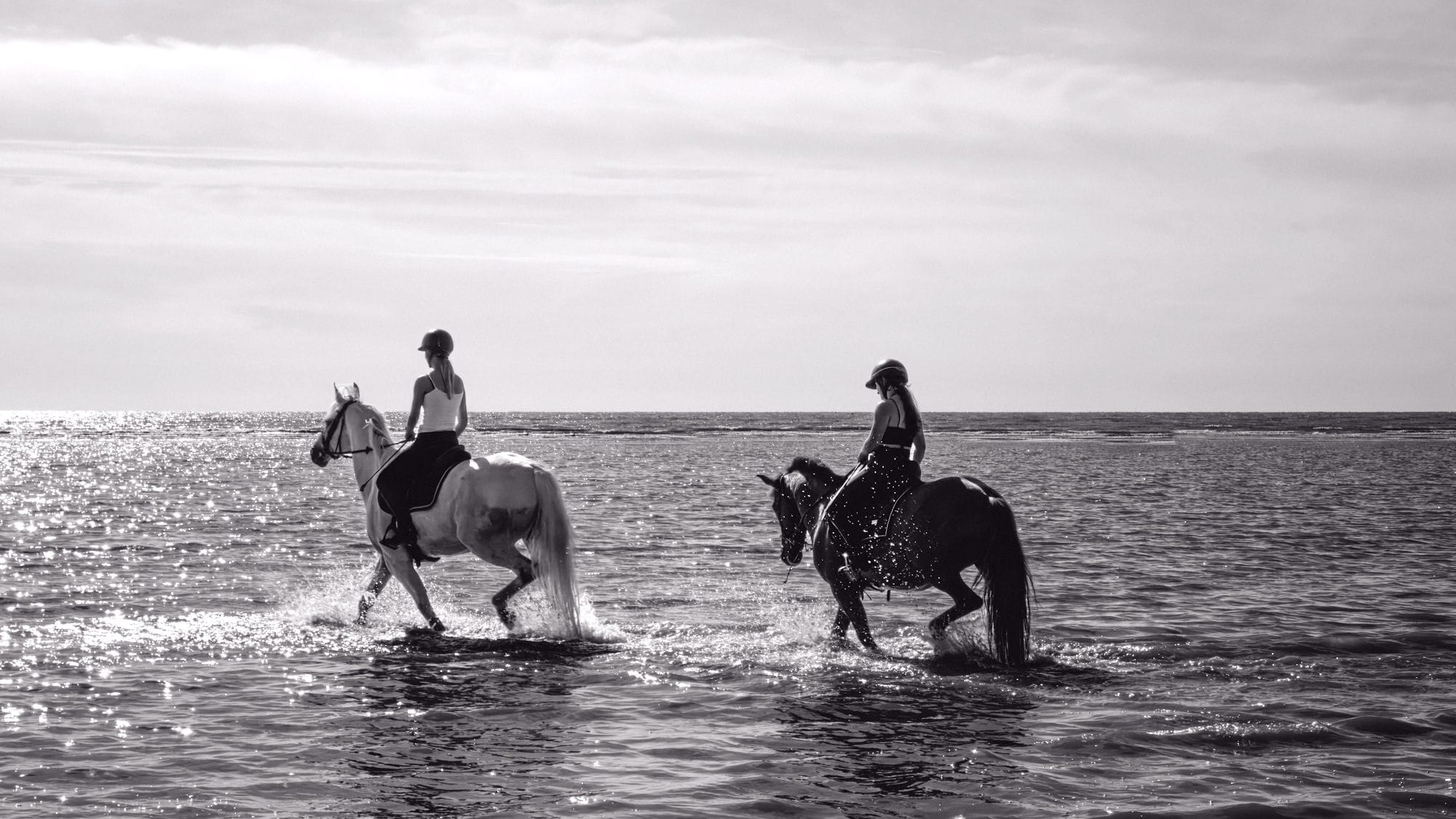
Operational ethics, horse welfare, and why serious riding holidays in Sri Lanka demand restraint.
A riding holiday is often described as a simple equation: a destination, a horse, and time in the saddle. This framing is convenient, marketable, and largely incorrect.
In reality, a riding holiday is an operational system. Every ride is the outcome of dozens of decisions about horses, terrain, rider capability, heat, logistics, pacing, and restraint. When those decisions are made well, the experience feels effortless. When they are not, the costs are absorbed silently by the horse.
Ethics in riding holidays are rarely visible. They are embedded in preparation, judgment, and the willingness to limit volume rather than maximize it.
The horse is not the product — the system is
Horses do not experience holidays. They experience workload, repetition, recovery, and pressure.
Ethical riding is not determined by how a horse looks in a photograph, but by cumulative factors: conditioning cycles, rotation schedules, tack fit, terrain selection, rest days, and the ability to stop a ride before strain becomes injury.
Many riding holidays fail ethically not because of bad intent, but because the system is built around throughput rather than stewardship. When horses are treated as interchangeable units within a schedule, welfare becomes reactive instead of preventative.
A serious riding operation treats the system itself as the primary responsibility. The ride is simply its visible output.
Logistics decide welfare more than intention
Good intentions do not protect horses. Logistics do.
Route planning, ground conditions, access to water, heat management, and recovery windows determine whether a ride should happen at all. This becomes especially clear in operating environments that expose weak systems quickly.
In Sri Lanka, heat, humidity, sandy terrain, and variable infrastructure mean that riding ethics cannot be theoretical. Hydration planning, footing assessment, horse rotation, and support logistics are prerequisites, not enhancements.
An operation that lacks backup capacity, route intelligence, or the ability to adapt in real time will eventually shift strain onto the horse. Ethical riding requires redundancy, not optimism.
Rider management is an ethical obligation
One of the least discussed welfare risks in riding holidays is rider mismatch.
Skill gaps, balance issues, fatigue, and overconfidence translate directly into pressure on the horse. An ethical operation does not treat rider ability as a personal matter. It treats it as a welfare variable.
Routes, pacing, and horse selection must adapt to the rider, not the reverse. This also requires the discipline to refuse rides that cannot be conducted responsibly.
Saying no is often the most ethical decision available.
Volume is the enemy of ethics
Scale is frequently framed as success. In riding holidays, it is often the opposite.
High volume compresses recovery time, reduces individual assessment, and incentivizes repetition. Over time, it erodes the margins where welfare is protected.
Low volume is sometimes described as luxury. This is misleading. Low volume is not an indulgence. It is an operational requirement for ethical riding.
Ethical riding holidays are rare not because demand is low, but because restraint is difficult to maintain.
What to look for in an ethical riding holiday
For riders seeking a responsible experience, the most reliable indicators are not scenic promises but operational transparency. Serious operators are willing to discuss:
• Horse conditioning and rotation practices
• Terrain and footing, not just scenery
• Staff-to-rider ratios and support presence
• Heat and hydration management
• Clear limits on rider suitability and group size
The absence of these conversations is itself a signal.
Ethics require place-specific discipline
Ethical riding cannot be standardized globally. It must respond to context.
In Sri Lanka, where riding conditions vary sharply between coastal, dry-zone, and inland terrain, welfare depends on local knowledge, route intelligence, and disciplined logistics. Operators who treat geography as a backdrop rather than a constraint tend to externalize risk onto horses.
Responsible riding holidays acknowledge that place matters — not aesthetically, but operationally.
A note on Vonfidel Ranch
At Vonfidel Ranch, a private equestrian estate in Sri Lanka, riding holidays are structured as a responsibility rather than an attraction.
Horses are managed for longevity, not output. Routes are selected for footing and welfare before scenery. Rider volume is deliberately limited, and every ride is supported by planning, backup capacity, and the discretion to change or stop when conditions demand it.
This approach is not designed to scale. It is designed to hold.
Why ethical riding holidays will always be limited
Ethics impose constraints. Constraints limit volume. That is not a flaw in the model. It is the model.
As interest in riding holidays grows globally, the distinction between experiences that look ethical and those that are will become sharper. The difference will not be visible in marketing. It will be visible only in systems.
For riders, operators, and destinations alike, the future of responsible equestrian travel depends less on expansion and more on restraint.
Founder & CEO, Vonfidel Group. Chair, VONFIDEL K9 & Vonfidel Ranch. His work focuses on trust-based operational doctrine, welfare-first horsemanship, and the systems that determine whether a riding holiday is ethically sound in practice.
https://insights.cognisive.co/what-makes-a-riding-holiday-ethical/