
The Horse as a Partner, Not a Tool
Quiet horsemanship is built on trust, restraint, and judgment rather than force or display. Drawing on historical practice and modern experience at Vonfidel Ranch in Sri Lanka, this essay explores the horse as a thinking partner and the value of stewardship.

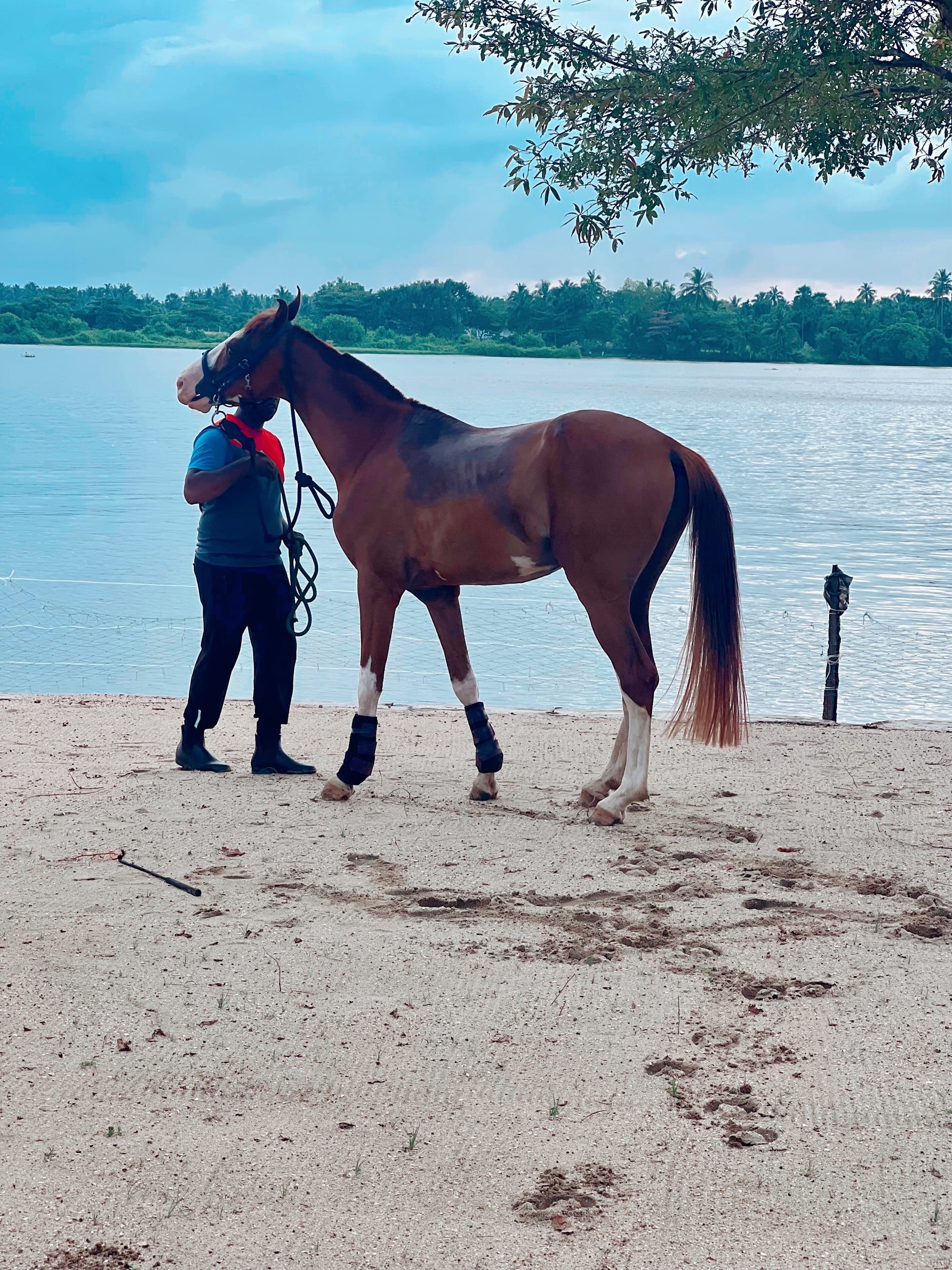
What Comanche horsemanship still teaches serious riders about trust, discipline, and continuity.
Before horsemanship became formalised into disciplines, federations, and competitive systems, there were cultures for whom the horse was not an accessory to life, but central to it. Riding was not recreation. It was infrastructure.
Among the most capable of these were the Comanche.
Much of what is written about Comanche horsemanship today is filtered through myth or popular imagery. That framing misses the point. What made their relationship with horses exceptional was not spectacle or bravado, but integration. Horse and rider were treated as a working unit, developed over time, under real conditions, with little margin for error.
That approach remains relevant, not as nostalgia, but as a reminder of what functional horsemanship looks like when performance, welfare, and survival are inseparable.
Comanche riders did not train horses for arenas or display. They trained them to move across unpredictable terrain, respond without hesitation, and remain calm under pressure. Excessive force had no place in that system. It created brittle animals and unreliable outcomes.
Accounts suggest that young horses were handled early and consistently, not broken abruptly. Training emphasised balance and responsiveness rather than submission. Equipment was light. Signals were minimal. Horses were expected to remain attentive and capable of making adjustments when conditions changed.
This was not softness. It was discipline of a higher order.
Experienced horsemen recognise this distinction immediately. Horses that are constantly managed become dependent. Horses that are trusted, within clear boundaries, become capable.
One of the defining features of Comanche horsemanship was the degree of responsibility placed on the horse itself. Riders could not micromanage movement at speed or across difficult ground. The horse needed spatial awareness, confidence, and the latitude to act.
Trust, in this context, was not abstract. It was operational.
A horse that panicked, hesitated, or shut down under stress endangered both itself and its rider. A horse that understood its role, and was physically and mentally prepared for it, became an extension of the rider’s judgment.
Modern riders often underestimate how much reliability comes from restraint. Over-control produces compliance in familiar settings, but failure in unfamiliar ones. This remains true whether riding trails, working cattle, or navigating natural terrain.
There is little evidence to suggest that Comanche horsemanship was indulgent or careless. Horses were valuable assets, and their condition mattered. Conditioning was progressive. Animals were rotated and rested. Overworking a horse was not only unethical, it was counterproductive.
This was not welfare as sentiment. It was welfare as logic.
When an animal’s health directly affects outcomes, mistreatment is a liability. Good horsemanship emerges not from idealism, but from responsibility.
Modern equestrian culture often drifts toward extremes. In some contexts, horses are treated as equipment. In others, they are romanticised in ways that ignore physical and behavioural realities.
The Comanche approach points to a different balance. One where the horse is respected as a thinking participant, and where training aims to build judgment rather than obedience alone.
At Vonfidel Ranch, this balance is central to how riding is practiced. Horses are not pushed for effect. Routes are chosen with terrain, weather, and conditions in mind. Riders are matched carefully. Intervention is deliberate, not constant.
The goal is not performance for its own sake, but coherence across horse, rider, and environment.
Sri Lanka presents its own constraints. Weather shifts quickly. Ground conditions vary. Horses must remain attentive and riders must remain adaptive.
In such environments, force is a poor substitute for judgment. Calm horses travel better. Riders who listen make fewer mistakes. Systems that respect limits tend to endure.
This is not about replicating historical practices. It is about recognising patterns that continue to work across geography and time.
Across equestrian, canine, and institutional work, Alfie Ameer has consistently emphasised the same principle: systems last when they are designed for continuity, not display.
The Comanche did not pursue elegance for appearance’s sake. They pursued reliability. The result was a form of horsemanship that was adaptable, disciplined, and sustainable.
Seen clearly, this is not a story about the past. It is a reminder that some of the most effective practices emerge where responsibility is unavoidable.
Horsemanship, when taken seriously, is not static. Methods evolve, conditions change, but certain fundamentals remain.
Trust earned slowly. Pressure used sparingly. Clarity maintained at all times.
For riders who value substance over spectacle, and for estates that see horses as partners rather than props, these principles continue to matter.
Quiet competence tends to outlast noise.