
Why Most Dog Training Fails
A rigorous examination of why most dog training fails, how true working-dog development differs from command-based training, and what ethical, cognitive, and institutional standards are required to produce stable, reliable dogs in high-trust environments.

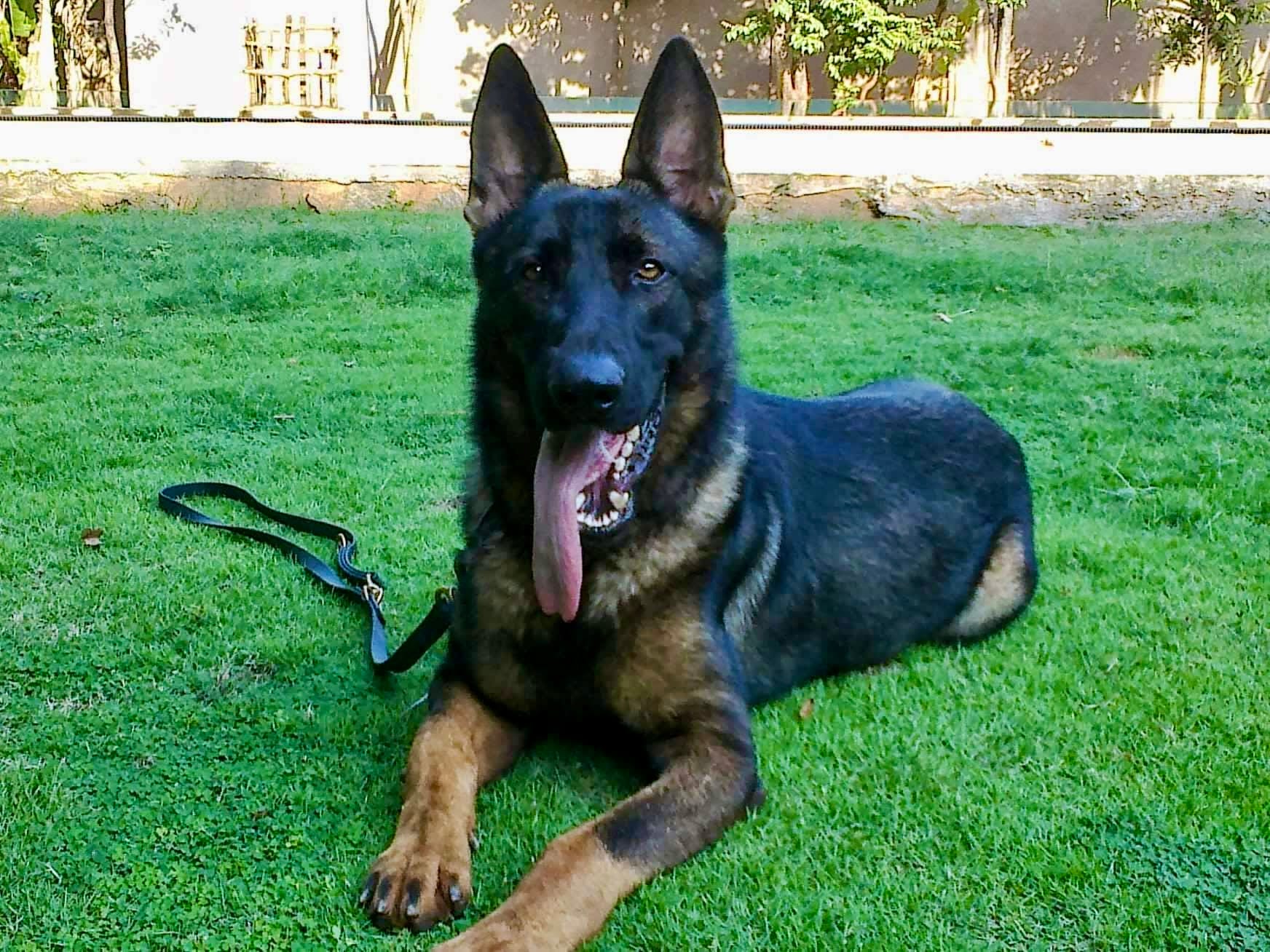
On Discipline, Development, and the Ethical Architecture of Working Dogs
There is a quiet confusion at the heart of the modern dog training industry.
It presents itself as a technical practice. Commands, repetitions, reinforcements, protocols. It markets itself as skill acquisition. It promises obedience, control, and reliability.
And yet, across many environments, the outcomes are increasingly fragile. Dogs that “know the commands” but collapse under stress. Dogs that perform in training fields and fail in real settings. Dogs that comply but do not stabilize. Dogs that obey but do not adapt.
The problem is not effort. The problem is not enthusiasm. The problem is conceptual.
Much of what is sold as dog training is not development. It is stimulus management. It shapes responses without shaping the organism.
In working dogs, that distinction is everything.
Training teaches behaviors. Development builds capacities.
Training can teach a dog to sit, stay, recall, track, or detect. Development builds the cognitive, emotional, and neurological substrate that allows those behaviors to remain stable under pressure, novelty, ambiguity, fatigue, and threat.
A dog that has been trained may perform. A dog that has been developed can function.
This is why many “trained” dogs fail when moved from controlled environments into real ones. The commands are present. The structure is absent.
Working dogs are not mechanical systems. They are social, perceptual, emotional, and decision-making organisms embedded in complex environments and relationships.
If the dog has not been developed as such, no amount of training can compensate.
This is not merely a technical problem. It is an ethical one.
When humans impose performance demands on animals without first building the internal capacities that make those demands fair, they create stress, instability, and often pathology.
The dog becomes the site of the system’s failure.
It manifests as anxiety labeled as disobedience, reactivity mislabeled as aggression, shutdown mislabeled as calm, and compliance mistaken for wellbeing.
In this way, much of the industry quietly externalizes its own structural errors onto the animal. The dog is blamed for what the method failed to build.
Legitimate working-dog development rests on three foundations.
Cognitive clarity. The dog understands not only what is expected, but why and when.
Emotional stability. The dog can regulate arousal, stress, and uncertainty without collapsing or escalating.
Relational trust. The dog perceives the handler not as a controller, but as a stabilizing reference point.
Without these, obedience is brittle. With them, performance becomes resilient.
As dogs are increasingly deployed into complex roles, security, detection, and public-facing work, the mismatch between what is demanded and what is built becomes more costly.
Not just financially. Not just operationally. Morally.
The more responsibility we place in dogs, the more responsibility we carry for the integrity of how we shape them.
Development is slower than training, more expensive, less scalable, and less marketable. It is also the only thing that remains reliable over time.
The future of working dogs does not belong to louder methods, harsher tools, or ever more elaborate reward systems.
It belongs to quieter disciplines, stricter ethics, and deeper understanding.
It belongs to institutions willing to trade speed for substance, scale for integrity, and spectacle for seriousness.
That is not a popular path. It is the only honest one.
Alfie Ameer is the Founder and CEO of Vonfidel Group and Chair of VONFIDEL K9 , a professional working-dog institution operating in Sri Lanka since 2009. His work focuses on disciplined human–animal systems, ethical animal development , and long-horizon reliability in high-trust environments. He writes on cognition, temperament, and operational handling standards designed to protect outcomes without compromising animal welfare, particularly where discretion and dependability are non-negotiable.