
When the Gate Opens: Understanding Pit-Type Dogs, Sudden Bites, and the Responsibility Every Owner Must Accept
Pit-type dogs never bite “out of nowhere.” They give clear early signals, but humans miss them. This article explains why these dogs escalate during pressure and transitions, the signs owners overlook, and the responsibility required to keep them safe and stable.

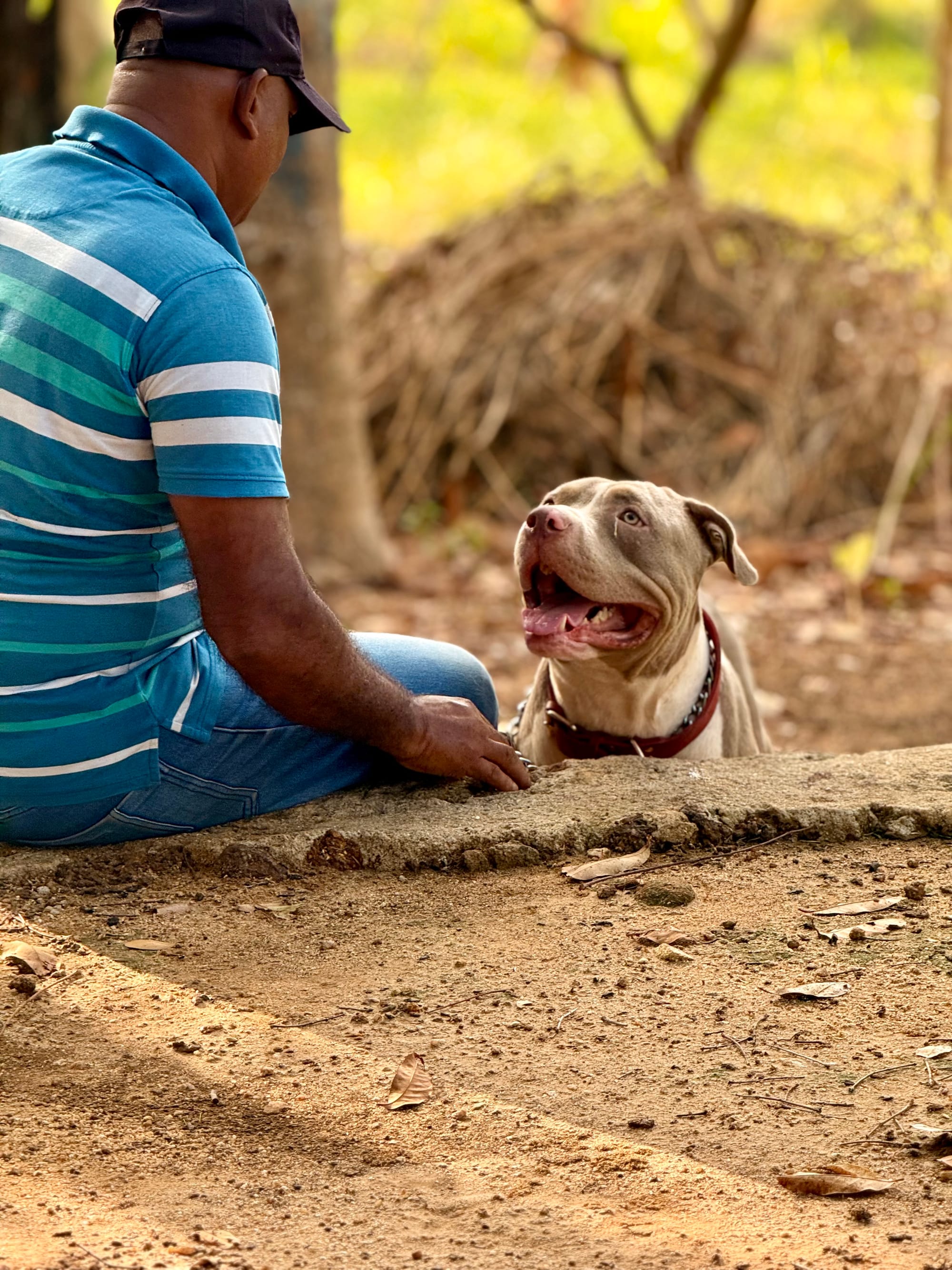
By VONFIDEL K9
Pit-type dogs are some of the most affectionate, people-oriented, and emotionally expressive breeds in the world. Yet they are also among the most misunderstood. When incidents occur, they are often labelled as “sudden,” “unprovoked,” or “without warning.”
In reality, dogs do not bite out of nowhere. They always communicate long before contact is made.
The problem is not the dog.
The problem is that humans don’t see, don’t understand, or don’t respect the signals.
This article helps owners understand what is really happening before a bite, why pit-type dogs escalate the way they do, and why responsible ownership is not optional — it is essential.
Pit-Type Dogs Feel Deeply — and Communicate Early
Before any growl, lunge, or bite, pit-type dogs give numerous early warnings. These can be subtle and easily missed:
- Stillness or freezing
- A stiff mouth or sudden mouth closure
- Head turning away
- Body turning slightly sideways
- Brief, sharp exhale
- “Whale eye”
- Tension through the shoulders or forelimbs
- Lip licking, yawning, sniffing (displacement signals)
- Holding the breath
- Hyper-focus that “locks on”
These behaviours are not quirks — they are pressure signals attempting to avoid escalation. When ignored or punished, the dog loses safe ways to communicate.
A bite is never sudden. It is communication that was ignored for too long.
Why Pit-Type Dogs Seem to Escalate Fast
Pit-type dogs are:
- Highly emotional
- Highly bonded to their humans
- Highly sensitive to pressure
- Physically capable of significant force
They don’t “snap” — they express. When they become overwhelmed, that expression intensifies quickly.
Owners often unknowingly add pressure:
- Grabbing the collar
- Reaching over the dog’s head
- Tightening the leash
- Forcing greetings
- Becoming emotional during stress
- Pushing through warning signs
These actions amplify stress until escalation becomes unavoidable.
Bites Usually Happen in Transitional Moments
A clear pattern emerges across cases:
Most bites occur during transitions — when the dog is shifting states and the human is not paying attention.
- When the gate opens
- Entering or exiting the house
- Leashing or unleashing
- Handler handoffs
- Doorway greetings
- Passing another dog tightly
- Removing resources
- Sudden excitement spikes
Pit-type dogs struggle with impulse control during transitions, especially when stress has been building.
“He Gave Me No Warning.”
He Did. You Didn’t See It.
Owners often notice only the final behaviour — the growl, snap, or bite.
But the true warnings come earlier — subtle stress signals and avoidance behaviours.
Many pit-type dogs suppress warnings because they’ve learned:
- Growling gets punished
- Showing discomfort leads to scolding
- They must tolerate anything
- Warning signals are mislabelled as aggression
So they stop communicating. The bite is not sudden — the communication was silenced.
The Fidelity Method: A System Pit-Type Dogs Respond to Best
Pit-type dogs flourish under calm, consistent, structured handling. At VONFIDEL K9, we use the Fidelity Method — a trust-first behavioural system for emotionally intense dogs.
1. Clarity
Clarity removes anxiety. When a dog knows what is expected, conflict drops dramatically.
2. Consistency
Pit-type dogs cannot relax into unpredictability. Predictable routines create stability.
3. Calm Authority
They don’t follow force — they follow stability. Calm authority is grounded, neutral leadership without intimidation.
Where Owners Go Wrong — Without Realising It
Owners mean well — but unintentionally create unsafe conditions:
- Pushing greetings
- Allowing strangers to touch/hover
- Letting children invade space
- Grabbing during stress
- Reinforcing excitement
- Face-to-face greetings in tight areas
- Ignoring early signals
- Lack of structure
Pit-type dogs are forgiving — until they reach threshold.
Your Responsibility as an Owner
Pit-type dogs require a higher level of responsibility — not unfairly, but realistically.
- Read signals early
- Control the environment
- Prevent pressure stacking
- Manage transitions carefully
- Stay emotionally neutral
- Provide structure and clarity
- Never put the dog in unsafe situations
Powerful, emotional dogs require leadership — not assumptions.
When the Gate Opens — Your Moment of Truth
Pressure → Miscommunication → Overload → Transition → Bite.
The moment “the gate opens” — literally or metaphorically — everything you’ve built is tested.
Your dog depends on:
- Your relationship
- Your clarity
- Your consistency
- Your leadership
- Your emotional steadiness
If you fail, the dog fails with you. If you lead well, the dog follows well.
Pit-type dogs need direction, calm, and clarity — not dominance.
With proper leadership, they become what they truly are: loyal, stable, deeply human-connected companions.