
When Riding Becomes Use: The Quiet Line Ethical Horsemanship Must Not Cross
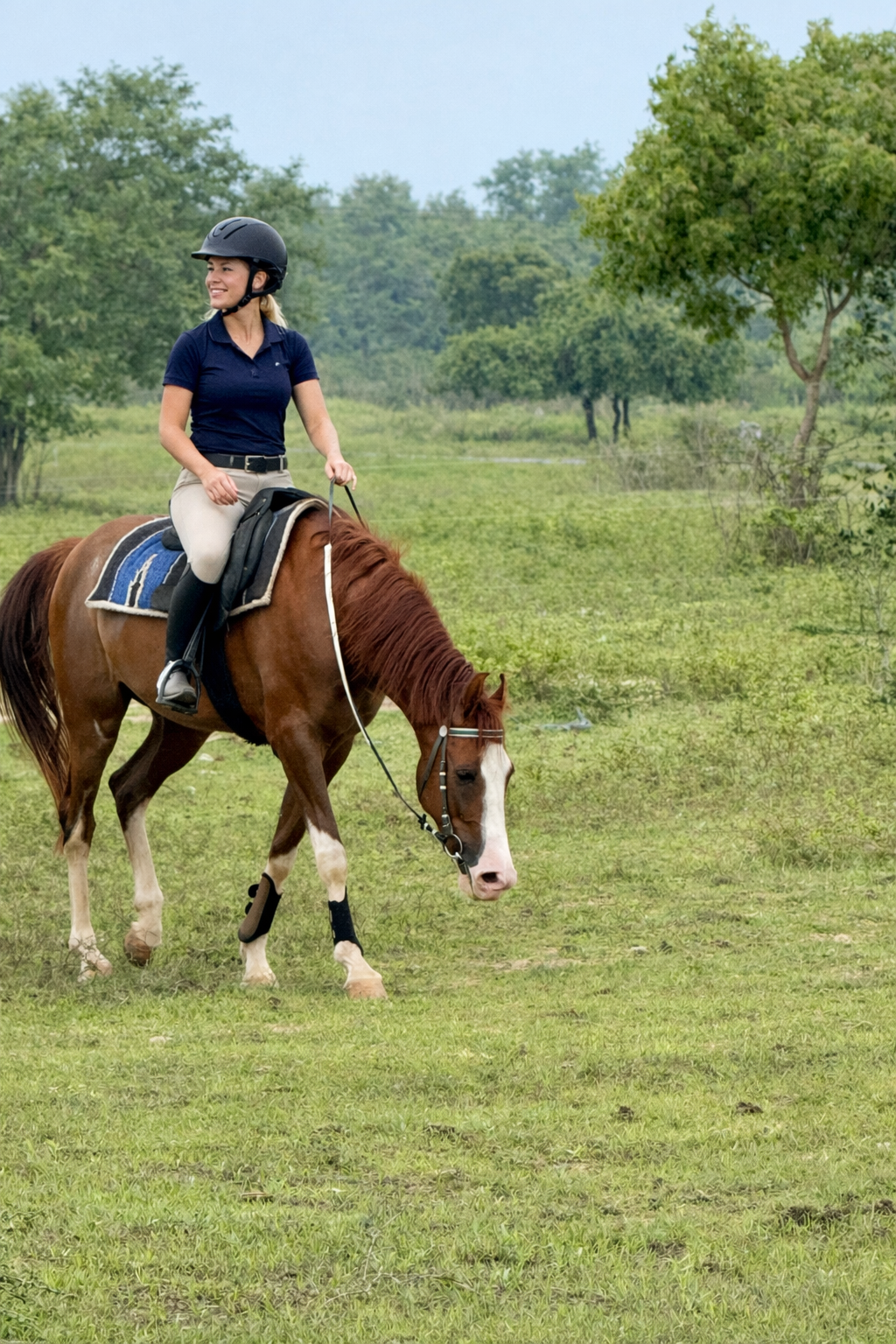
A quiet moment from a Vonfidel Ranch Riding Holiday, where riding is guided by trust, restraint, and the living partnership between horse and rider — not performance, pressure, or spectacle.

There is a moment every horseperson recognizes, even if they struggle to name it.
It arrives quietly.
Not in the obvious abuses—overworked animals, poor tack, rough hands—but in something subtler. A hesitation ignored. A fatigue rationalized. A decision made for convenience rather than partnership.
It is the moment riding stops being a conversation and becomes extraction.
That line is rarely discussed in modern riding culture, especially within the growing world of riding holidays and equestrian tourism. Yet it is the most important line we have. Cross it often enough, and the horse ceases to be a participant. It becomes infrastructure.
The Discomfort We Avoid Naming
Most riding experiences today are well intentioned. Horses are fed, groomed, exercised, and outwardly “looked after.” Riders are smiling. Reviews are positive. Photos circulate.
And yet, something still feels wrong.
The problem is not cruelty in the classical sense. It is pressure—incremental, normalized, defended. Horses carrying riders they are not suited for. Riding schedules optimized for demand rather than recovery. Terrain chosen for spectacle rather than sustainability. A quiet expectation that the horse will comply because that is what horses are for.
We rarely call this unethical. We call it operational.
That is precisely the problem.
Partnership Is Not a Metaphor
True horsemanship does not begin with riding. It begins with restraint.
A horse that trusts does so because it has learned that its signals matter—that hesitation is read, that fatigue is noticed, that confusion does not invite punishment. Trust is not trained into a horse; it is preserved by what we choose not to demand.
When riding becomes routine, it is tempting to treat this trust as a given. But trust is perishable. It erodes through repetition without recovery, through mismatches between rider and horse, through environments that demand more than the animal can comfortably give.
Ethical riding requires us to acknowledge something uncomfortable: not every willing horse is a suitable horse, and not every eager rider should be allowed to ride.
Saying no is the hardest skill in horsemanship. It is also the most important.
Volume Is the Enemy of Care
The fastest way to cross the ethical line is to scale without discipline.
Volume demands predictability. Predictability demands standardization. And standardization is fundamentally at odds with horses, who are not interchangeable units but individuals with limits that shift day to day.
When riding operations prioritize throughput—number of rides, number of guests, number of sessions—the horse becomes a schedule to be managed rather than a partner to be listened to. Fatigue is reframed as conditioning. Resistance becomes a training issue. The solution is almost always to push through.
Ethical horsemanship moves in the opposite direction. It accepts fewer rides. It builds redundancy. It rotates horses even when they appear capable of more. It treats “could” and “should” as entirely different questions.
This costs money. It costs growth. It costs convenience.
That cost is the point.
The Rider’s Responsibility Is Often Ignored
Much of the ethical burden is placed on the horse and the operator, but riders themselves play a decisive role.
Riding well is not about control. It is about balance, timing, softness, and awareness. A rider who is technically competent but inattentive can do more harm than a novice who listens.
Yet most riding environments are structured to accommodate the rider’s expectations rather than challenge them. Horses are selected to compensate. Systems are built to absorb imbalance. The animal pays the price for the human’s learning curve.
An ethical approach flips this logic. It asks whether the rider belongs on the horse at all. It matches not just weight and height, but temperament, seat, and intent. It treats rider suitability as dynamic, not fixed.
This is uncomfortable in a culture that markets access. But access without accountability is exploitation, even when it wears a smile.
Environment as an Enforcer of Ethics
Certain landscapes do not allow shortcuts.
Heat, humidity, uneven ground, dense vegetation, and seasonal unpredictability impose limits no policy document can override. In such environments, ethics cease to be philosophical. They become operational necessities.
Terrain reveals fatigue faster. Climate punishes overconfidence. Horses that are pushed beyond reason do not merely resist—they fail. The land itself enforces consequences.
This is where many riding experiences quietly collapse. What works in manicured arenas or temperate climates does not translate. Ethical riding in demanding terrain requires humility: fewer hours, slower paces, greater recovery, and constant recalibration.
It also requires accepting that some days, riding simply should not happen.
The Discipline of Saying No
Perhaps the clearest marker of ethical horsemanship is not what an operation offers, but what it refuses.
Refusing a ride because the horse has worked enough.
Refusing a rider because the match is wrong.
Refusing to increase volume because the margin for care disappears.
These decisions are rarely visible to guests. They do not appear in marketing. They do not photograph well.
And yet, they are the decisions that determine whether riding remains a partnership or devolves into use.
Ethics, in this sense, are not values statements. They are constraints deliberately imposed on oneself.
Trust as the Only Honest Metric
We often measure riding experiences through satisfaction, exhilaration, or novelty. But these metrics center the human exclusively.
The only metric that truly matters is trust—specifically, whether the horse leaves the experience more trusting than it entered it.
Trust shows up in small ways: a lowered head, a softer eye, a willingness to step forward without tension. It is fragile, slow to build, and quick to lose.
Once lost, it is rarely regained through technique alone.
If riding is to survive with integrity, trust must replace spectacle as the measure of success. Not the rider’s thrill. Not the guest’s review. Not the operator’s margin.
Trust.
A Choice the Industry Must Make
The global appetite for riding experiences will continue to grow. That is inevitable. What is not inevitable is how the industry responds.
It can continue to optimize for access, scale, and visual appeal—crossing the ethical line incrementally while insisting nothing is wrong.
Or it can accept restraint as a professional obligation. Fewer rides. Fewer guests. More refusal. More silence. More care.
This path will never dominate the market. It was never meant to.
But it is the only path that keeps riding from becoming something horses endure rather than share.
If we care about horses—not abstractly, but practically—then the quiet line between riding and use must be guarded, even when no one is watching.
Especially then.
The author operates a low-volume equestrian estate in Sri Lanka, working within demanding terrain where restraint, rotation, and trust are enforced operationally rather than explained as philosophy.