
The Quiet Line Between Riding and Using Horses
An editorial on the ethical line between partnership and consumption in riding—why welfare, restraint, and trust must govern serious equestrian travel.

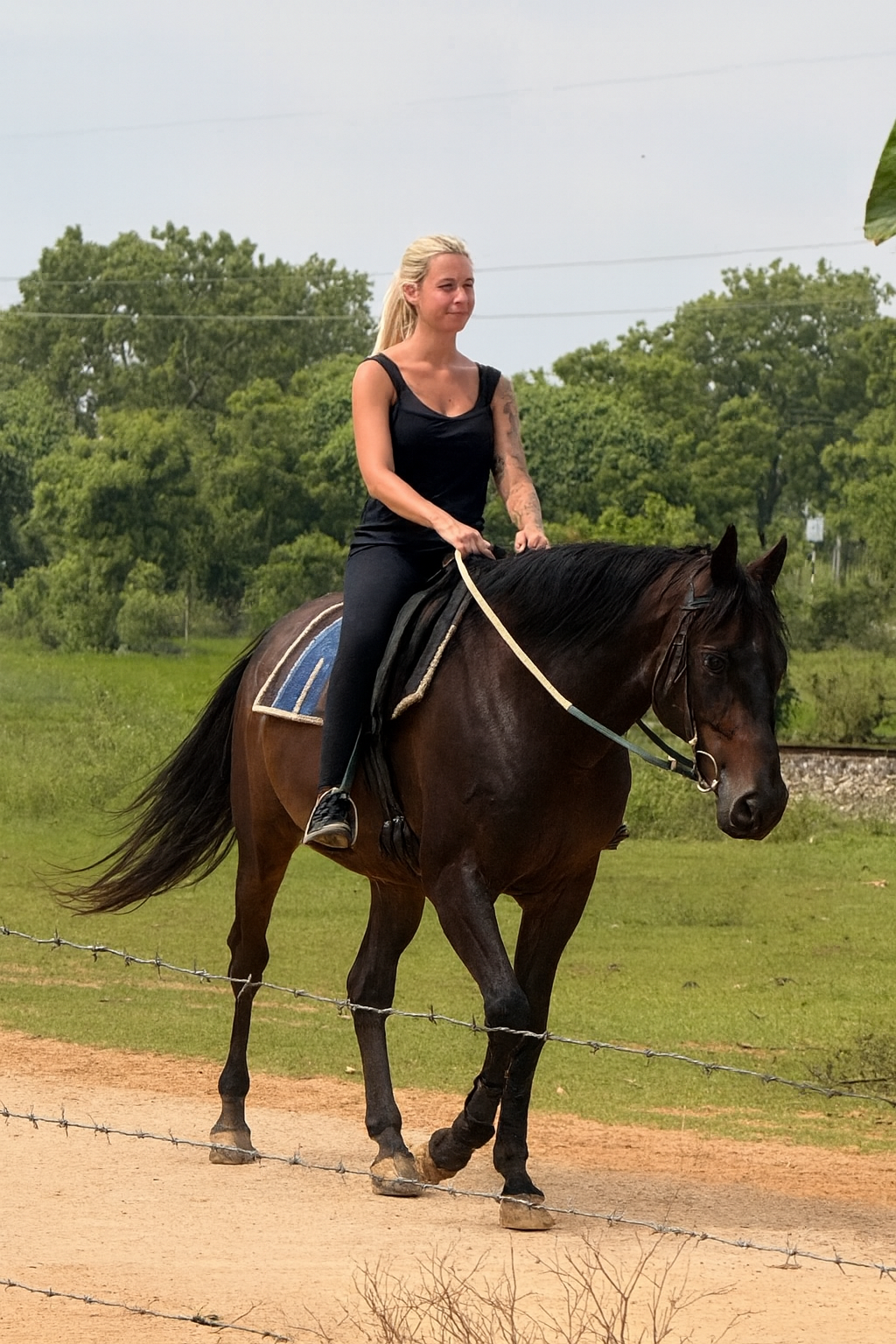
There is a point at which riding ceases to be partnership and becomes consumption. Most equestrian travel crosses that line without noticing it.
At Vonfidel Ranch, everything we do is designed to remain on the correct side of that boundary.
This is not a statement of superiority. It is a statement of limits.
Riding Is Not the Point
Most riding holidays sell the ride: distance covered, terrain conquered, moments captured. Horses become the medium through which an experience is delivered.
We chose a different starting point.
At Vonfidel Ranch, the ride is secondary. The relationship is primary.
That single inversion changes everything — from how horses are trained, to how many guests are accepted, to how often a horse is asked to work, to what we refuse to offer even when there is demand.
Welfare Is Not a Feature. It Is Governance.
Many operations speak about welfare as an attribute: better stables, better feed, better care.
We treat welfare as governance.
That means:
- Not every horse is ridden, even if it is capable
- Horses rotate out of work by policy, not convenience
- Volume is capped long before demand is met
- Some guests are declined, regardless of ability to pay
These are not marketing positions. They are operational constraints.
They exist because horses are not interchangeable assets. They are sentient partners whose longevity, soundness, and trust matter more than any itinerary.
Why Low Volume Is Non-Negotiable
Scale is the enemy of integrity in riding operations.
As volume increases:
- Selection standards drop
- Horses work more frequently
- Decisions become commercial rather than ethical
We chose to cap volume deliberately.
At any given time, only a portion of our herd is in active riding rotation. Others remain rested, reserved, or entirely out of work. This limits availability, but it protects the core relationship between horse and rider.
High-end clients understand this instinctively. Serious riders do not ask, “How many rides can I do?” They ask, “How is the horse?”
The Type of Rider This Attracts
Vonfidel Ranch is not designed for beginners seeking novelty, nor for tourists collecting experiences.
It resonates with riders who:
- Already ride well
- Understand feel over force
- Value quiet competence
- Recognise when something has been deliberately not optimised for mass appeal
Many guests tell us the same thing, independently:
“This feels less like a holiday, and more like being allowed into a practice.”
That is exactly the point.
Why We Don’t Advertise in the Usual Ways
We do not compete on price. We do not run volume campaigns. We do not promise availability.
Trust is not built through exposure. It is built through consistency and restraint.
Those who are meant to find this place tend to recognise it quickly — often after years of riding elsewhere.
A Note on Permission
Riding at Vonfidel Ranch is not positioned as a purchase. It is framed as permission.
Permission granted only when:
- Rider experience aligns with horse welfare
- Expectations align with reality
- The relationship will be respectful on both sides
This protects the horses first. It also protects the integrity of the work.
Why This Exists at All
Sri Lanka does not need another riding holiday operation. It needs fewer — done properly.
Vonfidel Ranch exists to demonstrate that it is still possible to ride with seriousness, humility, and ethical clarity, even in a travel context.
Not everyone will agree with this approach. That is acceptable.
Those who do tend to understand immediately why it matters.
About the Author
Alfie Ameer is the Founder of Vonfidel Ranch and VONFIDEL K9, and CEO of Vonfidel Group. His work spans ethical animal training, institutional trust, and the governance of high-responsibility practices. He writes on restraint, leadership, and credibility built over time.