
The Operational Ethics of Riding Holidays: What Guests Never See
A riding holiday is an operational system where every decision affects horses and riders alike. This essay explores the quiet disciplines behind welfare-first, trust-based riding, and why low-volume operations are a responsibility, not a luxury.

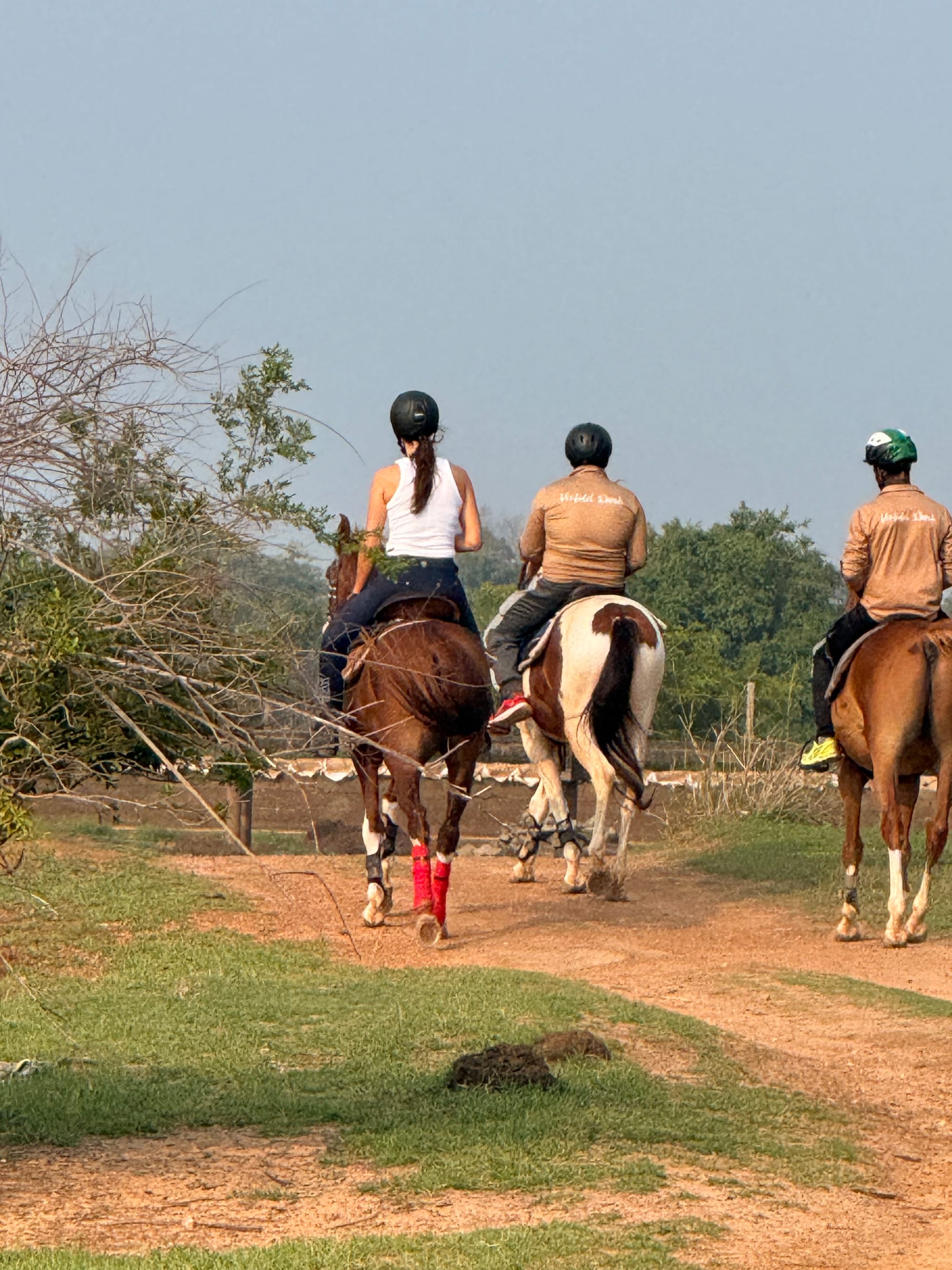
A riding holiday is often sold as a simple idea: a beautiful place, a good horse, a few hours in the saddle. In reality, it is an operational system. Every decision inside that system has ethical consequences for the horses, for the riders, and for the people responsible for both. Most guests will never see that layer. They should not have to. But they should know it exists, because it is the difference between a holiday that merely looks good and one that is genuinely responsible.
Travel language tends to flatten complexity. “Trail ride.” “Horse safari.” “Beach canter.” Those labels can make riding sound like a single activity, when it is actually a chain of dependencies: horse selection, conditioning, terrain assessment, rider competence, weather exposure, route logistics, emergency readiness, and the psychology of both horse and human under uncertainty.
When an operator treats riding as an add-on experience, ethics becomes optional. When an operator treats riding as a system, ethics becomes unavoidable. It is built into every decision. This is why the best riding holidays do not feel theatrical. They feel calm. They feel predictable. They feel professionally held.
Horse welfare is easy to advertise and hard to prove. It is not a slogan and it is not a stable tour. It is the discipline of daily choices: how horses are conditioned, how they are rotated, how they are fed, how they are rested, and how often an operator chooses to say no.
Ethical riding operations build limits into the business model. That means accepting constraints some guests will never notice, but the horses will feel immediately: capped ride volumes, adequate rest cycles, terrain-appropriate work, and a refusal to push through simply because someone has paid.
A horse is not an asset that can be run harder when demand rises. It is a living partner. If an operation cannot remain disciplined at peak season, it is not ethical. It is simply lucky when nothing goes wrong.
There is a quiet misconception in riding tourism: that safety is created by control. In practice, safety is created by trust, built through consistency and calm authority. This applies to horses, and it applies to riders.
Horses do not become safe by being dominated. They become safe by being understood, correctly conditioned, and handled by professionals who can read small changes in behaviour and energy before those changes become risk. Riders do not become safe by being pressured into bravery. They become safe by being assessed, appropriately matched, and supported in a way that builds competence without ego.
The most responsible riding holidays do not reward theatrics. They reward composure. They do not chase speed for its own sake. They calibrate pace to the guest, the horse, the terrain, and the weather, because ethics is not a mood. It is a decision standard.
A riding holiday can feel effortless only when the operation behind it is disciplined. What reads as “relaxed” to the guest is often the result of serious, unseen work.
“Low volume” is often marketed as luxury. In ethical riding, it is something more basic. It is the only way to preserve welfare and safety without turning horses into machinery. A high-turnover riding schedule produces predictable outcomes: fatigue, dulled responsiveness, and increased risk. The decline can be gradual, and then it becomes sudden.
Low volume allows an operation to do what responsible equestrian practice requires: match horses carefully, rotate intelligently, pause when conditions change, and adjust the plan without financial panic. It also creates space for the most overlooked requirement of all: genuinely knowing the guest.
The best riding holidays are not built on intensity. They are built on judgement.
On a well-run riding holiday, many of the most important actions happen before the guest arrives at the mounting block. Terrain is assessed. Routes are chosen and rechecked. Weather is read realistically, not optimistically. Horse pairings are reviewed. Tack is inspected. Contingency options are planned.
On the trail, ethical operations do not rely on luck. They rely on structure. That structure often includes advance party route reconnaissance and backup support, not as theatrics, but as a quiet safety doctrine. It also includes reliable transportation to and from riding locations, so the riding can be curated intelligently rather than constrained by convenience.
Guests may never notice any of this. They might simply experience a day that feels smooth, calm, and confidently paced. That is precisely the point. The absence of drama is not an accident. It is a choice, upheld by preparation.
Riding holidays sit at an unusual intersection. They are both hospitality and horsemanship. They deal in pleasure, but they carry consequence. An operator is responsible not only for comfort, but for stewardship: of animals, of terrain, of human confidence, and of decision-making under changing conditions.
That responsibility cannot be delegated to marketing, nor solved with disclaimers. It is solved through standards. Through staffing. Through training. Through restraint. Through the willingness to reduce volume rather than dilute ethics. Through the humility to end a ride early, change a route, or revise a plan when reality demands it.
The best riding holidays are not defined by what guests are allowed to do. They are defined by what the operation refuses to do, because it understands the cost.
Alfie Ameer is the Founder & CEO of Vonfidel Group and the Chair of Vonfidel Ranch. His work focuses on trust-based operational doctrine across animal training, safety-led field practice, and disciplined hospitality systems. Vonfidel Ranch is a private, low-volume equestrian estate in Sri Lanka, built around welfare-first horsemanship and carefully curated riding holidays.