
The Discipline of the Ride

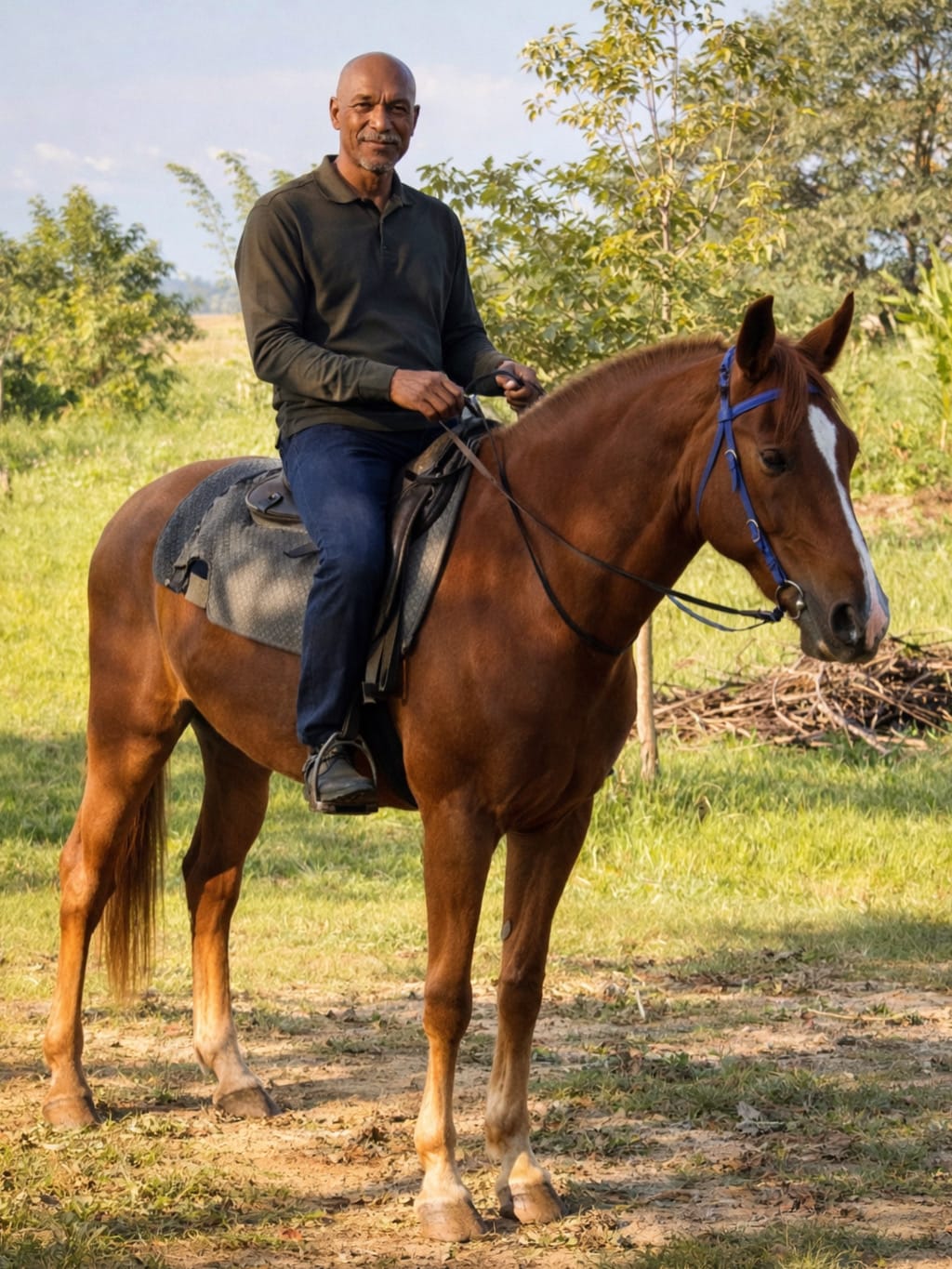
On terrain, trust, and why serious riding cannot be reduced to experience design.
Most failures in field environments do not come from a lack of resources. They come from misalignment. Between people, terrain, timing, and the realities shaping the situation on the ground.
Riding is no different. Yet it is routinely treated as though it were.
Across much of the global riding industry, the discipline has been restructured into a consumable format. Horses are expected to compensate for inconsistency. Terrain is reduced to predictable routes. Risk is translated into visible reassurance. The rider is placed at the centre of a system designed to deliver a controlled outcome.
It is efficient. It is commercially viable. It is also structurally misaligned with the reality of riding as a discipline.
Riding as a field system
Properly understood, riding is not an activity. It is a field system operating under constraint. Horse, rider, terrain, and external variables interact continuously. None of them are static. None of them can be isolated without consequence.
The objective, therefore, is not to “deliver” a ride. It is to maintain alignment within that system as conditions shift.
This is the point at which most commercial models diverge. Alignment is difficult to scale. It requires judgement, timing, and restraint. It resists standardisation. As a result, it is often replaced with control.
The cost of simplification
Simplification has a cost. When terrain is reduced to a route, information is lost. When horses are trained to absorb inconsistency, clarity is lost. When riders are insulated from consequence, awareness is lost.
The system may continue to function. But it functions at a lower resolution.
Over time, this produces a version of riding that is stable, repeatable, and largely disconnected from the conditions that originally defined it.
The Vonfidel Ranch position
At Vonfidel Ranch, riding is not structured as an experience layer. It is structured as an operational system.
Terrain is interpreted, not staged. Horses are maintained as responsive participants, not buffered carriers. Riders are not positioned as passive recipients, but as part of the system that must hold together under movement.
This requires a different posture.
Less emphasis on performance. More on coherence.
Less visibility. More control.
Less reaction. More structure.
Safety as pre-emption
Safety, in this context, is not a visible overlay. It is embedded in how the system is run. Ground is assessed in advance. Conditions are verified. Movement is adjusted before instability emerges.
The objective is not to respond effectively. It is to reduce the likelihood that response becomes necessary.
Why volume breaks the model
Systems built on alignment do not scale cleanly. Increased volume introduces variability, pressure, and fatigue. Each erodes the precision required to maintain coherence.
Low volume, therefore, is not a positioning choice. It is an operational constraint.
Conclusion
A signature riding holiday, properly defined, is not a refined version of a standard product. It is a different structure entirely.
It does not attempt to simplify the ride. It preserves it.
About the author
Alfie Ameer is the Founder of Vonfidel Group. His work focuses on decision-making under constraint, operational systems, and trust-based structures across both human and animal environments.
Alfie Ameer is the Founder of Vonfidel Group. His work focuses on decision-making under constraint, operational systems, and trust-based structures across both human and animal environments.
Originally published on insights.cognisive.co.