
The Cult of Churchill: Brilliance Without Benevolence
Behind the cigar smoke and speeches lies a darker truth: Winston Churchill’s “greatness” was brilliance without benevolence — a triumph of rhetoric that excused empire, racism, and famine. This essay re-examines the man behind the myth — and what his cult reveals about us.

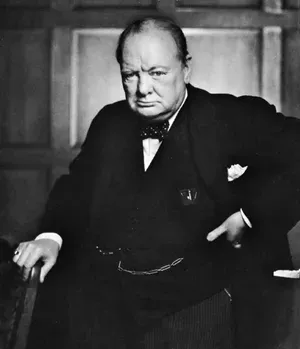
Why the West’s greatest wartime hero remains one of history’s most dangerous myths.
I. The Man Who Invented Himself
Few figures in modern history have been as zealously embalmed in myth as Winston Churchill.
To Britain, he is the indomitable bulldog who “saved civilization.”
To the colonies he ruled — from Bengal to Kenya — he is remembered less for defiance than for disdain.
Churchill’s genius lay not merely in his command of language or war, but in his mastery of narrative control. He understood that the victor writes history, but more importantly — the victor edits empathy. His speeches mobilized morale; his memory mobilized moral amnesia.
“History will be kind to me,” Churchill once said, “for I intend to write it.”
He did — and the world applauded.
II. Brilliance Without Benevolence
In the West, Churchill’s brilliance is still treated as an alibi for his brutality.
The 1943 Bengal Famine — which killed between three and four million Indians — was dismissed by Churchill as the fault of the “Indians breeding like rabbits.”
He diverted food from starving colonies to Europe’s stockpiles, ensuring that the imperial war effort would never go hungry — only its subjects would.
To call this a “policy failure” is to sanitize cruelty with bureaucracy.
It was, rather, the moral arithmetic of empire — one where certain lives were expendable so that others could dine in dignity.
“Brilliance without benevolence is not greatness. It is simply efficiency in the absence of empathy.”
Churchill’s defenders insist on “context.”
But context is not absolution. It is anatomy.
And the anatomy of Churchill’s worldview — from his defense of chemical weapons against “uncivilized tribes” to his racial hierarchy theories — reveals a consistent truth: his courage was inseparable from his contempt.
III. The West’s Mirror
The persistence of the Churchill cult says less about him and more about us.
In lionizing Churchill, the West enshrines the idea that victory absolves violence.
That moral clarity can be postponed for the sake of strategic necessity.
That empire, when painted in sepia, can masquerade as civilization.
Every generation that quotes Churchill uncritically participates in a ritual of selective remembrance.
Britain needed a hero — and the world, hungry for one, obliged.
But the myth of Churchill is not merely British. It is civilizational. It affirms the comforting illusion that moral complexity excuses moral collapse.
“The measure of greatness is not the number of enemies defeated, but the number of innocents defended.”
IV. The Bengal Lesson
The Bengal famine remains one of the most devastating — and most denied — tragedies of the 20th century.
Archival records, including those of the British War Cabinet, show Churchill’s indifference not as an oversight, but as a worldview.
He was convinced India was unfit for self-rule, describing Hindus as “a beastly people with a beastly religion.”
Even as rice rotted in Calcutta’s depots, ships carrying grain to Europe sailed past Bengal’s dying villages.
The famine did not kill Churchill’s reputation; it killed empathy’s credibility.
It exposed how imperialism could disguise itself as destiny — and how the suffering of millions could be footnoted beneath the glory of one man’s prose.
V. The Myth Machinery
Churchill’s postwar canonization coincided with the West’s need for a moral archetype during the Cold War.
He became not just a man, but a metaphor: democracy’s guardian, tyranny’s slayer.
Hollywood turned his vices into virtues — the drinking, the arrogance, the defiance — rebranding them as the necessary ingredients of greatness.
This is the danger of unexamined heroism.
When brilliance is divorced from benevolence, leadership becomes performance.
And performance — when repeated long enough — becomes policy.
VI. Beyond Churchill
The challenge is not to vilify Churchill but to outgrow him.
To admire his resolve while rejecting his racism.
To recognize that leadership’s highest currency is not charisma but conscience.
Every nation must one day confront its mythology.
Britain’s begins with Churchill.
Ours begins with the courage to name brilliance that betrayed its own humanity.
“Greatness that demands the suffering of others is not greatness — it is grandeur without grace.”
The cult of Churchill endures because we still mistake eloquence for ethics.
Perhaps the real victory lies not in rewriting history, but in recovering honesty.
About the Author
Alfie Ameer is the Founder & CEO of Vonfidel Group, Chair of VONFIDEL K9 and Vonfidel Ranch, and Principal Consultant at Cognisive Consultants. His research and fieldwork intersect leadership psychology, behavioral design, and institutional ethics — examining how cognition, conditioning, and colonial legacies shape modern governance and trust. He writes at Insights by Cognisive Consultants on leadership, security, and socio-cultural reform.