
Memory, Messaging, and the Modern Intelligence Burden in Sri Lanka
An analysis of how Sri Lanka must evolve from threat-based security to narrative intelligence, recognising memory and identity as the real modern battlegrounds.

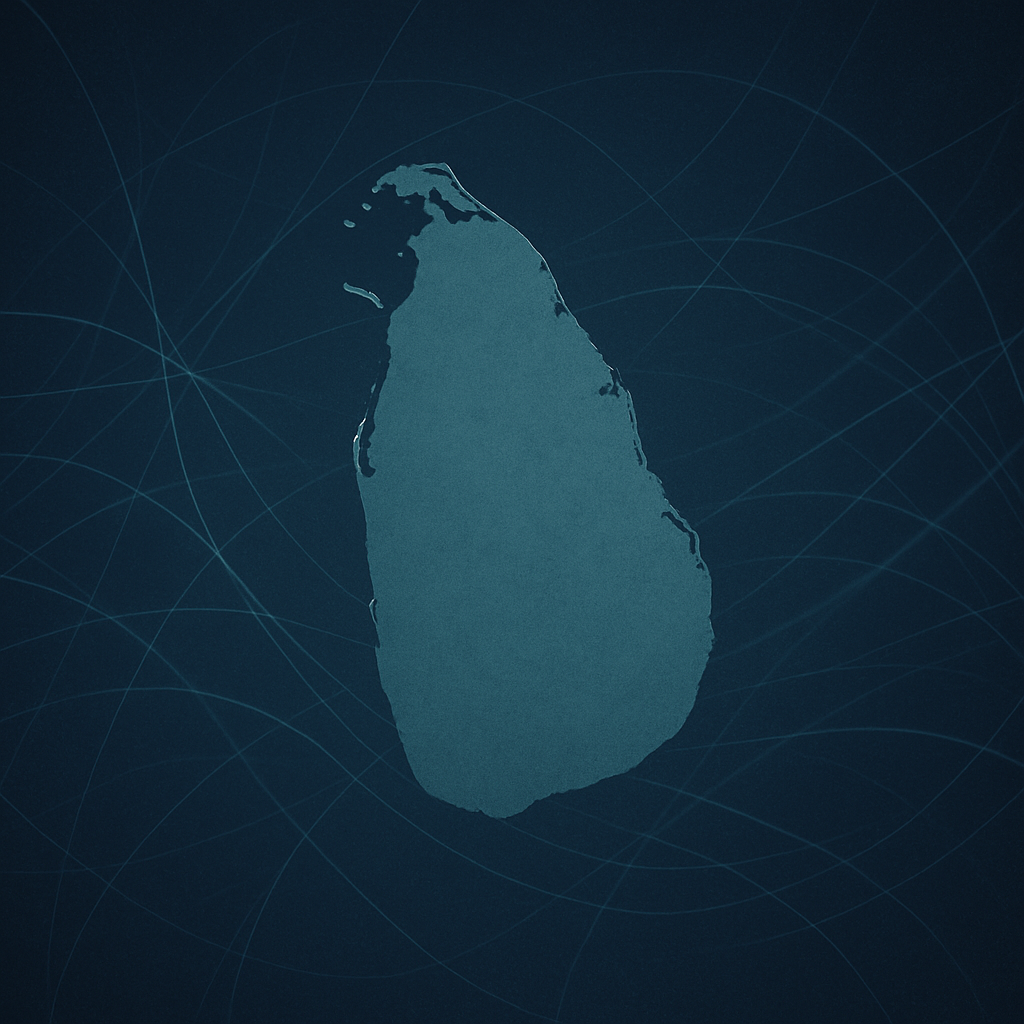
More than fifteen years after the defeat of the LTTE, Sri Lanka continues to operate within the long aftershock of a conflict whose operational environment has changed, but whose symbolic terrain remains contested. Nowhere is this clearer than every November. Great Heroes Day has become an annual diagnostic tool — not for insurgency revival — but for assessing political temperature, community sentiment, and the state’s capacity for emotional intelligence within national security practice.
The ceremonies, vigils, imagery, and digital commemoration surrounding November 27 are not inherently dangerous. Their significance lies in what they reveal: memory remains the most resilient form of political currency in Sri Lanka.
What the country confronts today is no longer the LTTE as an organisation, but Tamil Eelam as a layered identity, an intergenerational narrative of grievance and aspiration — sustained across borders, political climates, and time.
When the Battlefield Moves to Memory
Mahil Dole’s recent analysis of Great Heroes Day makes a valuable contribution to this discussion, particularly his argument that the LTTE’s defeat was military and territorial — not psychological or narrative. The “Three M’s” he highlights — motivation, men, and money — continue to animate the ideological circulatory system of Tamil Eelam.
However, where Dole focuses on structural persistence, the strategic implication for intelligence is broader and more urgent:
Sri Lanka still interprets remembrance as a potential precursor to militancy, while the contemporary arena is symbolic, not kinetic.
Commemoration today unfolds through:
- diasporic political messaging
- university discourse
- memorial culture
- digital archiving
- advocacy networks
- identity-based narrative formation
This is not a mobilisation environment for armed struggle. It is a contest for meaning, legitimacy, emotion, and representation. A counterterrorism doctrine built for a pre-2009 reality cannot accurately interpret a post-2009 symbolic landscape.
The Intelligence Challenge of a Post-War Generation
A generation is now entering academic, political, and activist spaces with no lived experience of the war. Their connection to Tamil Eelam is inherited rather than operational, emotional rather than organisational.
To them, Great Heroes Day functions less as a mechanism of mobilisation and more as:
- a cultural anchor
- a memorial vocabulary for loss
- a statement of unresolved political questions
- an assertion of dignity and belonging
If Sri Lanka seeks long-term stability, then its intelligence community must broaden its mandate from threat detection to sentiment mapping.
This requires:
- psychological literacy, not only threat matrices
- community intelligence, not merely informant networks
- narrative foresight, not reactive policing
- intergenerational dialogue, not surveillance alone
- political empathy, not bureaucratic caution
A modern intelligence service must understand how identity becomes weaponised — and, equally, how it can be gradually disarmed through legitimacy and inclusion.
Countering Extremism Requires Countering Hopelessness
Hard security can prevent violence.
Only political credibility can prevent the longing that sustains symbolic resistance.
Sri Lanka cannot legislate memory out of existence, nor can it neutralise emotional inheritance through prohibition. Attempts to suppress remembrance inevitably amplify the very narrative they aim to contain.
If the state wishes for the idea of Eelam to lose momentum over time, it must build a Sri Lanka — constitutionally, economically, and emotionally — where Tamils feel claimed, protected, and represented, not merely monitored.
The intelligence community’s role is not only to secure the nation from threats; it is to interpret the consequences of political actions before they become threats. Surveillance of risk must be balanced with advocacy for reforms that reduce risk at its source.
Preparing for the Next 20 Years, Not the Last 20
Sri Lanka’s vulnerability today is not the resurgence of militancy.
It is the absence of a shared national imagination.
The state has achieved mastery in security enforcement.
It has not achieved mastery in reconciliation.
A confident nation does not fear memorials. It absorbs them into a broader, pluralistic narrative of collective history. Panic, denial, or disproportionate suppression signal institutional insecurity, not strength.
If Sri Lanka wants to close this chapter, it must first acknowledge that the chapter still actively shapes how communities understand their place in the Republic.
The war ended.
Its meanings continue to negotiate space within the national story.
That is not a failure — unless we refuse to engage with it.
The Real Intelligence Test
The future of national security in Sri Lanka will be defined not by how the state responds to threats, but by how it responds to memory, symbolism, identity, and narrative evolution.
Peace was achieved through force.
Its permanence will depend on insight.
About the Author
Alfie Ameer is the Founder & CEO of Vonfidel Group, a global consultancy working across security advisory, intelligence support, and behavioural strategy. He chairs VONFIDEL K9 and Vonfidel Ranch, leading work on operational psychology, field capability, and trust-based systems. His writing examines the psychological foundations of stability and the evolving demands of modern statecraft.
Original Publication & Canonical Notice
This article is the original and authoritative version published on Insights by Cognisive Consultants (https://insights.cognisive.co). All other appearances — including on Medium, Substack, institutional platforms, or partner publications — are syndicated excerpts or adaptations. Any republication should credit the original source and author.