
Designing High-Reliability Water Systems for Equestrian Estates in Tropical Climates
In tropical equestrian environments, water is not an amenity but a control system. When designed for reliability under the hottest, driest, and most demanding conditions, it becomes the foundation that protects the land, the horses, and the work.

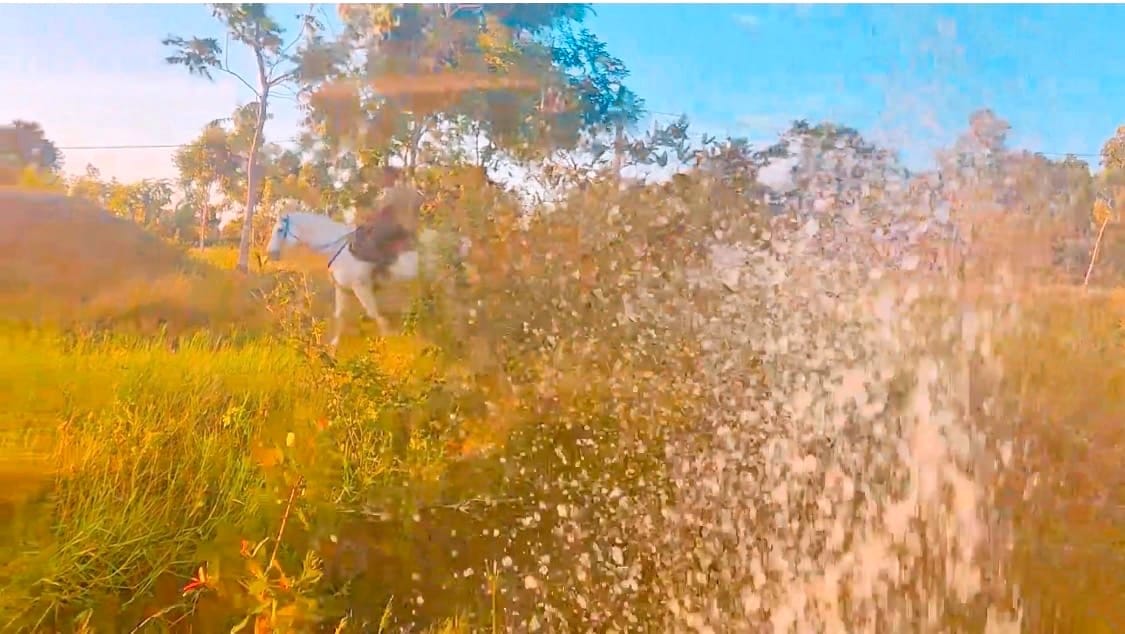
Water is not simply a resource in an equestrian environment. It is the stability layer beneath everything else — pasture regeneration, animal health, rider safety, and operational continuity. In tropical climates, the margin for error is narrow. Systems must be designed not for the ideal day, but for the worst possible week in the hottest month under peak load.
This article outlines a reliability-first engineering approach to water system design for equestrian estates in monsoon-variable regions, with real-world applicability across Sri Lanka, Southeast Asia, East Africa, and South America.
I. Climate & Environmental Variables
Tropical monsoon zones introduce high variability:
Variable | Impact on System | Design Requirement |
|---|---|---|
Seasonal rainfall arcs | Reservoir cycling and recharge windows | Storage capacity sized to peak drought weeks, not annual average |
High evaporation rates (30–55%+ higher than temperate zones) | Surface water loss | Shade structures, deep reservoirs, low-surface-area profiles |
Sandy/latosol soils (Eastern Sri Lanka zones) | Rapid drainage + low retention | Soil water retention strategies + deep rooting pasture grasses |
Heat index peaks (solar + humidity) | Horse thermoregulation stress | Guaranteed 24/7 water availability + cooling cycle irrigation |
Key Principle:
A water system in these environments must prioritize continuity under stress, not efficiency under normal conditions.
II. The Horse as a Design Parameter
A horse cools primarily through evaporative sweating, demanding:
- Clean, mineral-balanced water flow
- Predictable access throughout pasture segments
- Ability to cool body temperature before heart rate reaches working threshold
This means the water system must support:
- Continuous hydration availability
- Pasture moisture sufficient to support behavioral cooling (resting, rolling, shade movement)
- Cooling irrigation cycles during heavy work riding days
Water availability is not convenience — it is physiology.
III. System Architecture Overview
At a minimum, a tropical equestrian estate water system requires:
Primary Source → Filtration / Screening → Pressure Generation → Main Distribution → Zone Valves → Pasture Lines → Troughs / Rain Guns → Overflow/Return Paths → Reservoir Cycling
Where failure must be mitigated upstream, not downstream.
IV. Component-Level Engineering
Component | Function | Common Failure Mode | Engineering Mitigation |
|---|---|---|---|
Intake + Foot Valve | Prevents backflow & debris ingress | Clogging from silt/algae bloom | Floating intake + removable pre-screen cage |
Primary Pump (e.g., Diesel 3” NSP D-186FANSP) | Generates system pressure | Cavitation / overheat under continuous load | Pump shade canopy, elevated mounting, scheduled cool-down intervals |
Main Line (3”) | Pressure backbone | Friction loss over distance & elevation | Use friction-loss tables; avoid unnecessary couplers; minimize sharp bends |
Branch Lines (2”) | Distribution to pastures | Pressure drop at multi-head load | Zoning with manual or automated valves; sequence timing |
Gear-Driven Rain Guns(e.g., SIME Skipper) | Cools pastures & maintains grass recovery | Throw inconsistency due to wind shear | Nozzle selection matched to monsoon wind direction; timed cycles at dusk/dawn |
Reservoir / Holding Tank | Reliability buffer | Stagnation + microbial bloom |
Design Rule:
One system = multiple controlled nodes.
Do not design a single-line “one failure = full shutdown” network.
V. Designing for Reliability, Not Aesthetics
Most estates make the mistake of designing for the photograph.
For example:
- Decorative ponds instead of deep storage reservoirs
- Visible trough placement rather than shade-zone hydration stations
- Oversized rain guns used for dramatic visuals rather than pressure-stable irrigation consistency
A high-reliability system has redundancy at pressure nodes, not at pasture edges.
If a pump fails, water must still be on the land.
VI. Operational Rhythm & Maintenance Protocols
Daily
- Pressure check at pump head
- Valve sequence test per zone
- Visual flow inspection at trough edges
Weekly
- Intake screen removal + manual rinse
- Rain gun swivel bearing check & nozzle clearance test
Monthly
- Reservoir turnover rate verification (oxygen cycling)
- Pump oil change & temperature profile logging under load
Seasonally
- Calibrate rain gun throw arc to prevailing winds
- Evaluate pasture root recovery versus stocking pressure
Reliability is rhythm, enforced through checklists.
VII. Applied Example: Vonfidel Ranch (Eastern Province, Sri Lanka)
Vonfidel Ranch operates in a dry-zone grassland coastal corridor where:
- Evaporation is high
- Pasture regeneration must be protected
- Horse cooling cycles matter during long-range trail riding
System backbone:
- 3” main lay-flat as mobile seasonal trunk line
- 2” pressure branch to active pasture segments
- SIME Skipper gear-driven rain guns for thermal cooling and grass recovery
- Pump shade canopy + controlled duty cycle to prevent cavitation under load
This is not aesthetic infrastructure.
It is welfare architecture — designed to hold under real heat.
VIII. Conclusion
An equestrian estate is only as strong as the water system that regulates it.
If water is predictable, the land recovers.
If the land holds, the horses remain healthy.
If the horses remain healthy, the riding experience is authentic, safe, and sustaining.
Reliability is not a cost. It is the foundation of the environment itself.
About the Author
Alfie Ameer is the Founder & CEO of Vonfidel Group (VFG), a multi-vertical enterprise integrating equestrian tourism, working dog systems, regenerative land stewardship, intelligence consulting, and high-reliability leadership doctrine.