

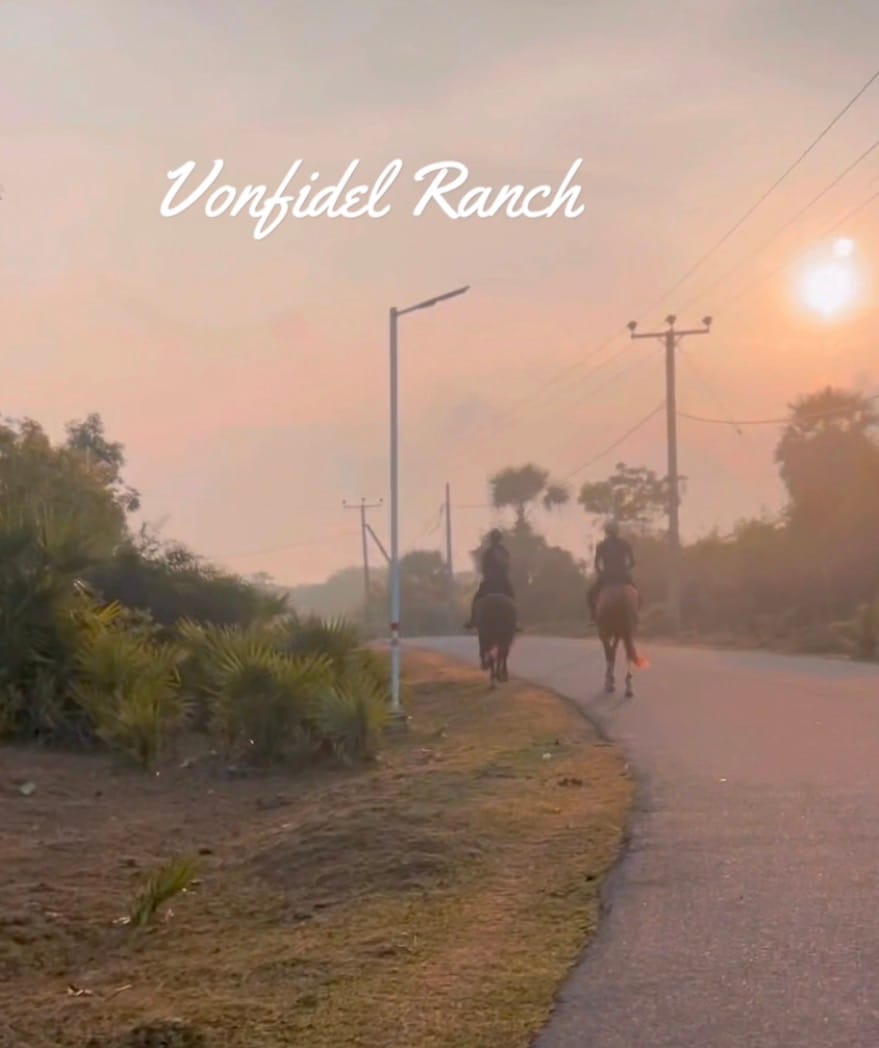
The day at Vonfidel Ranch does not begin with guests. It begins before light has properly settled on the land.
At 5:30 a.m., the staff are already awake. There is no arrival rush, no vehicles pulling in, no exchanges at a gate. Everyone who works here lives on the property. The morning does not start with movement toward the Ranch; it simply resumes from within it.
Tea is made first. Not in ceremony, not as ritual for visitors, but as an internal pause before work. Then the work begins without announcement.
No whistles. No raised voices. No visible hurry.
Twelve people move into position through familiarity rather than instruction.
Before any horse is saddled, and before any guest is considered, the horses are checked.
Each animal is visually inspected and physically handled. Limbs, hooves, back, posture, appetite, attitude. Nothing theatrical. Nothing symbolic. This is the first non-negotiable of the day. Fourteen to eighteen horses are examined every morning, whether they are scheduled to work or not.
These checks are not performed as a prelude to riding. They are performed as a condition of existence on the property.
Riding can be cancelled on the basis of these inspections. It is rare. Not because the rule is softened, but because prevention governs everything that precedes it. Nutrition is controlled. Work is rotated. Rest is enforced structurally, not emotionally. The absence of morning failures is not accidental; it is manufactured through months of restraint.
The wranglers do not rush these checks. It is the primary point of daily contact between handler and horse. Quiet hands. Familiar pressure. Subtle communication that outsiders rarely notice but animals always do.
Only after the horses are cleared does the preparation begin.
Tack is handled as equipment, not as accessory. Methodical, silent, deliberate. There is no sense of “getting ready for guests.” The Ranch does not prepare for performance; it prepares for correctness.
Some mornings, a guest will wander close toward the tail end of this routine. Coffee in hand. Still waking. No one invites them in, and no one pushes them away. Observation is permitted. Participation is not implied.
They see enough to understand that this place does not stage its discipline. It simply operates it.
Breakfast is served later. Conversations begin then. The energy of the Ranch shifts slightly when the guests are fully awake. But the order of priority does not change.
New arrivals come in the middle of the day or the late afternoon. They move into an environment that is already running. There is no ceremonial welcome into “experience.” There is orientation.
They are briefed. First casually — a human conversation. Then formally — with maps, routes, boundaries, movement logic, safety frameworks. This is not a tourism introduction. It is a tactical briefing.
No one is rushed onto a horse.
Sometimes guests do not ride on the day they arrive. The first evening is not for performance. It is for alignment. For observation. For understanding the rhythm they have entered.
The first ride, when it happens, always follows a formal briefing the next day. Not because the guests are unprepared — but because the system will not compress itself to accommodate impatience.
When horses eventually leave the yard under saddle, there is no spectacle. No lining up for photographs. No crowding. The movement is clean and unremarkable. Which is exactly the point.
After departure, the Ranch does not relax. It resets.
Reserve horses remain untouched. Some staff return to land work. Some to maintenance. Some to feed protocols. The same quiet order continues without reduction simply because guests have gone out.
At Vonfidel Ranch, the morning is not designed to impress. It is designed to hold.
It holds the horses.
It holds the staff.
It holds the standard.
Everything else fits around that — or it does not happen at all.