
The Architecture of Calm: Why Stillness Is the Highest Form of Leadership
Stillness is not absence. It is control. Calm is the first condition of leadership.

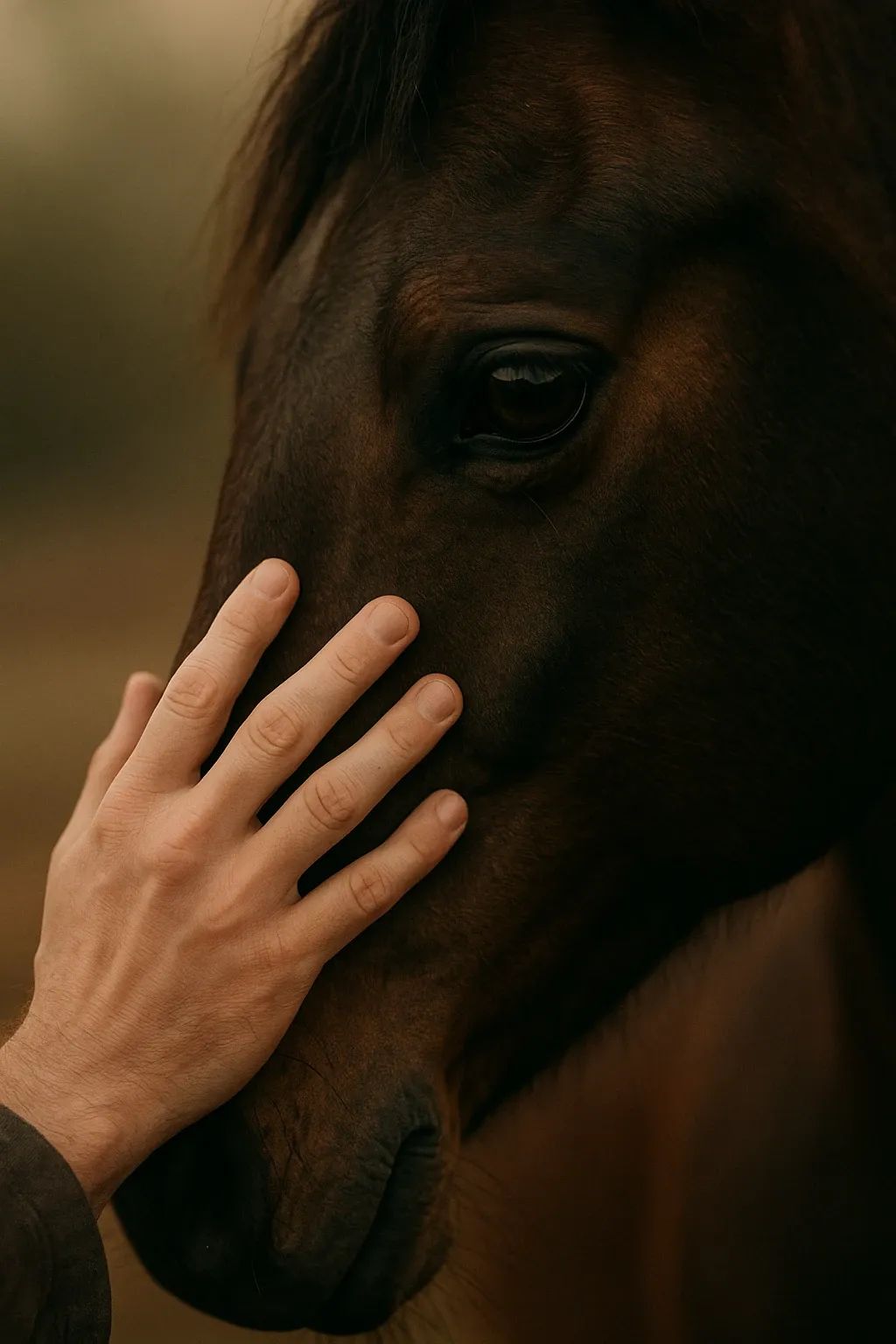
Stillness is the leader’s true instrument.
There is a strength that does not raise its voice. A strength that does not rush, defend, or explain. This strength is calm.
Calm is not the absence of intensity. Calm is the governance of it.
The calm leader is not passive. The calm leader is in possession of themselves. This is the foundation of authority.
1) Calm Is Physiological, Not Personality
Calm is not a mood. Calm is a nervous-system state.
A regulated system:
- Sees clearly
- Decides cleanly
- Holds direction under pressure
An unregulated system:
- Reacts instead of responds
- Protects ego instead of purpose
- Mistakes urgency for importance
Leadership fails first on the inside, not in strategy.
2) Horses Follow the Most Regulated Body in the Space
A horse does not take instruction from tension. It organizes around the one who is anchored.
It reads:
- Breath rhythm
- Grounding through the feet
- Micro-constriction in the jaw
- The emotional charge behind intention
If the handler is unsettled, the horse protects itself. If the handler is centered, the horse offers itself.
Authority is not asserted. Authority is recognized.
Vonfidel Ranch — signature riding leadership
3) Dogs Synchronize to State, Not Command
At VONFIDEL K9, the dog does not align to language. The dog aligns to the internal climate of the handler.
If the handler is frantic, the dog scatters. If the handler is irritated, the dog hardens. If the handler is regulated, the dog neutralizes.
To train the dog, stabilize the handler.
Calm is not a technique. Calm is the precondition of clarity.
Vonfidel Group — fidelity-based canine leadership (VONFIDEL K9)
4) Children Borrow Their First Nervous System
A child does not learn regulation through explanation. The child learns it through exposure to the regulated adult.
Your calm is their template. Your agitation is their confusion.
Boundary delivered without agitation becomes security. Boundary delivered with emotional leakage becomes fear.
Leadership is not what you say. Leadership is the state you hold.
5) Teams and Institutions Follow Stability, Not Status
In every room — boardroom, patrol base, family, stable — the true leader is the one who does not lose themselves when pressure rises.
- Does not rush when others panic
- Does not collapse into ego
- Stays oriented to what is essential
People synchronize to the most regulated presence. This is power without force.
Cognisive — strategy, systems, and calm execution
6) The Structure
- Foundation: Breath before action
- Pillar: Intention before expression
- Crown: Action without emotional leakage
The calm leader becomes the axis of the environment. The environment arranges itself around them — not by force, but by gravitational certainty.
Conclusion
Calm is structural.
Where there is calm, there is clarity.
Where there is clarity, there is direction.
Where there is direction, there is alignment.
The one who can remain still, leads.
Calm is strength. Calm is authority. Calm is love applied to power.
Related reading
- The Geometry of Obedience: Why True Authority Cannot Be Forced
- Between Banners and Shadows — Intelligence, Trust & Reform
Originally published on Cognisive Insights — strategic thought division of the Vonfidel Group (VFG).
Part of the leadership series: The Architecture of Trust.
About the Author
Alfie Ameer is the Founder & CEO of the Vonfidel Group (VFG), and Chair of VONFIDEL K9 & Vonfidel Ranch. His work centers on the principle that calm, clarity, and trust are the first conditions of leadership — in animals, organizations, families, and nations.
Explore more essays at insights.cognisive.co