
Lakewood Mounted Estate — A Different Reading of Place

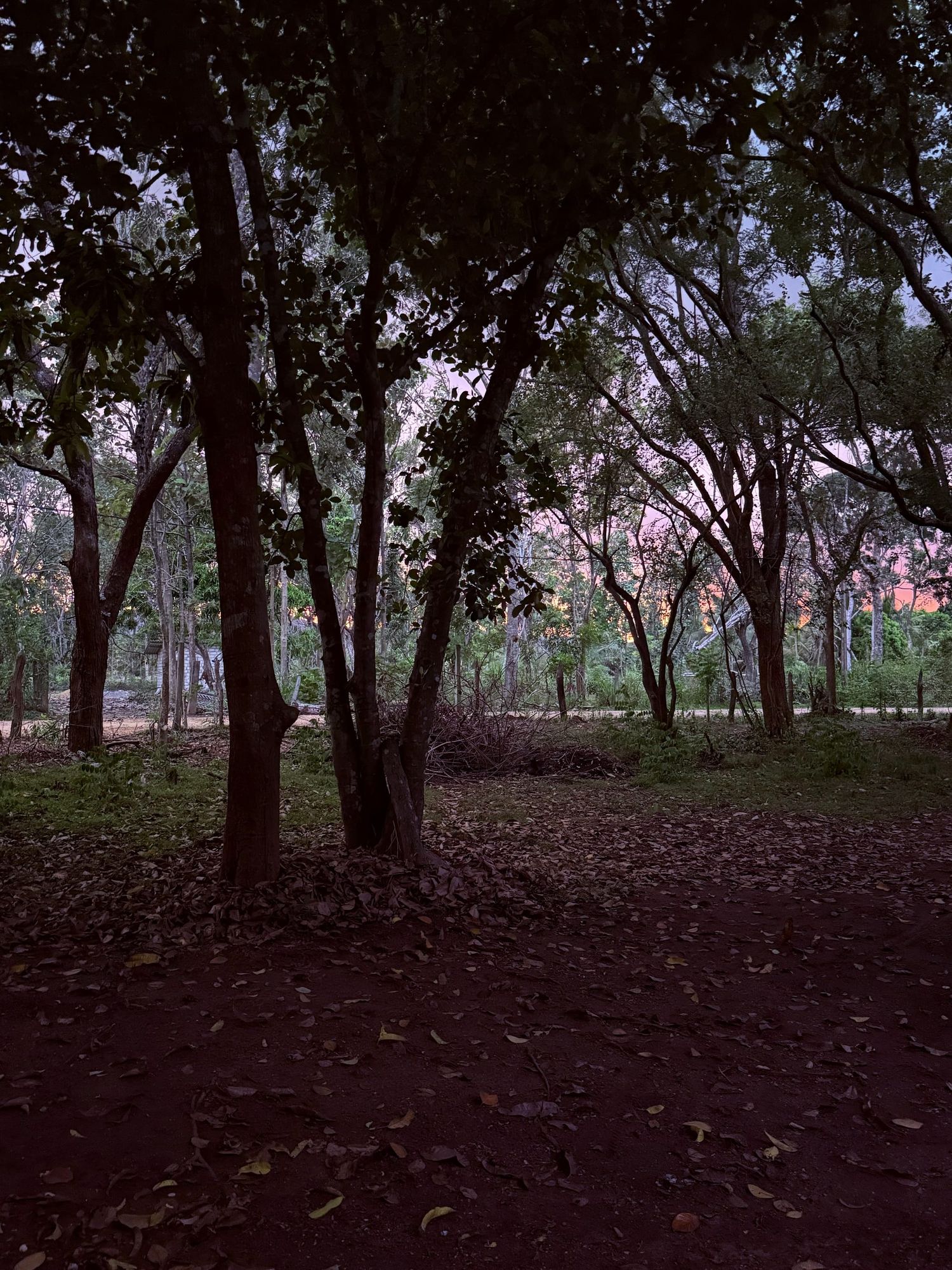
Habarana has long existed as a point of passage rather than a defined destination. It sits between the ancient cities, the dry-zone reservoirs, and the elephant ranges that shape Sri Lanka’s interior. For decades, its value has been described in terms of proximity.
What is more telling is what the region has retained. There remains a degree of spatial integrity here: tree cover, water systems governed by older irrigation logic, and wildlife movement that continues despite mounting pressure elsewhere. In a travel environment increasingly shaped by simulation, that coherence carries weight.
Lakewood Mounted Estate does not attempt to redefine Habarana. It works within its existing order, taking the view that a place of this nature is best approached with restraint rather than reinvention.
Most tourism developments begin with programme: room counts, circulation, revenue logic. The land is then adapted to support those intentions. The outcome is often predictable, regardless of geography.
A more considered approach reverses that sequence. The land is read first, its cover, its water, its lines of movement, and any built form is introduced only where it can sit without disruption.
At Lakewood Mounted Estate, the emphasis is not on architectural assertion but on measured placement. Nothing is cleared for effect. Nothing is added merely to make a visual argument.
This is not minimalism as an aesthetic choice so much as constraint as a working principle.
The equestrian element introduces a different logic to travel.
A vehicle passes through terrain. A horse moves within it.
The difference is practical rather than romantic. Pace changes. Distance becomes relative. Attention shifts to the ground itself: surface, heat, gradient, movement. The experience is not staged; it is negotiated.
In most tourism environments, animals are reduced to spectacle or utility. Serious operators, and increasingly serious travellers, recognise the limitations of that model.
A properly run equestrian environment depends on discipline. It requires timing, welfare standards, and a respect for both animal and terrain. It limits volume by necessity.
At Lakewood Mounted Estate, the horse is not an accessory. It establishes tempo, introduces a standard of care, and shifts the experience from passive observation to considered participation.
Environmental language in tourism has become overextended. Many projects speak of sustainability while remaining extractive in practice.
The more credible approach is quieter and more measurable.
Lower density. Reduced intervention. Respect for existing water systems. Distance from wildlife rather than proximity staged for effect. Decisions that preserve coherence rather than erode it.
In Habarana, this is not optional. The region’s value lies in the fact that it still functions ecologically. Any serious tourism model must begin from that premise.
The more credible end of the tourism sector is no longer defined by volume. Nor is it persuaded by generic luxury.
What carries weight now is coherence: whether a place understands itself, whether it has the discipline not to dilute that understanding, and whether its relationship with land can withstand scrutiny.
Lakewood Mounted Estate is compelling because it suggests a rarer form of ambition.
Not larger, but better placed.
Not louder, but more precise.
Not an attempt to stage nature, but an effort to work within it without diminishing it.
Sri Lanka does not require more tourism that repeats what can be found elsewhere. It requires places with enough clarity to remain specific.
In that sense, Lakewood Mounted Estate is less about trend, and more a signal of direction.