
Beyond Hospitality: Operating Responsibly in Elephant Country

Beyond Hospitality: Operating Responsibly in Elephant Country
Sri Lanka is receiving renewed global attention not only for its landscapes, but for the depth and quality of experiences the island can still offer.
Across the country, a growing number of travellers are seeking something more deliberate than conventional tourism. They are looking for places that still feel grounded in reality; landscapes that have not been entirely reshaped around visitor volume, and experiences that retain a genuine sense of place.
For Sri Lanka, the long-term opportunity may not lie in numbers alone. Increasingly, it may lie in carefully managed, high-value experiential tourism built on sound judgment, environmental awareness, and responsible operations.
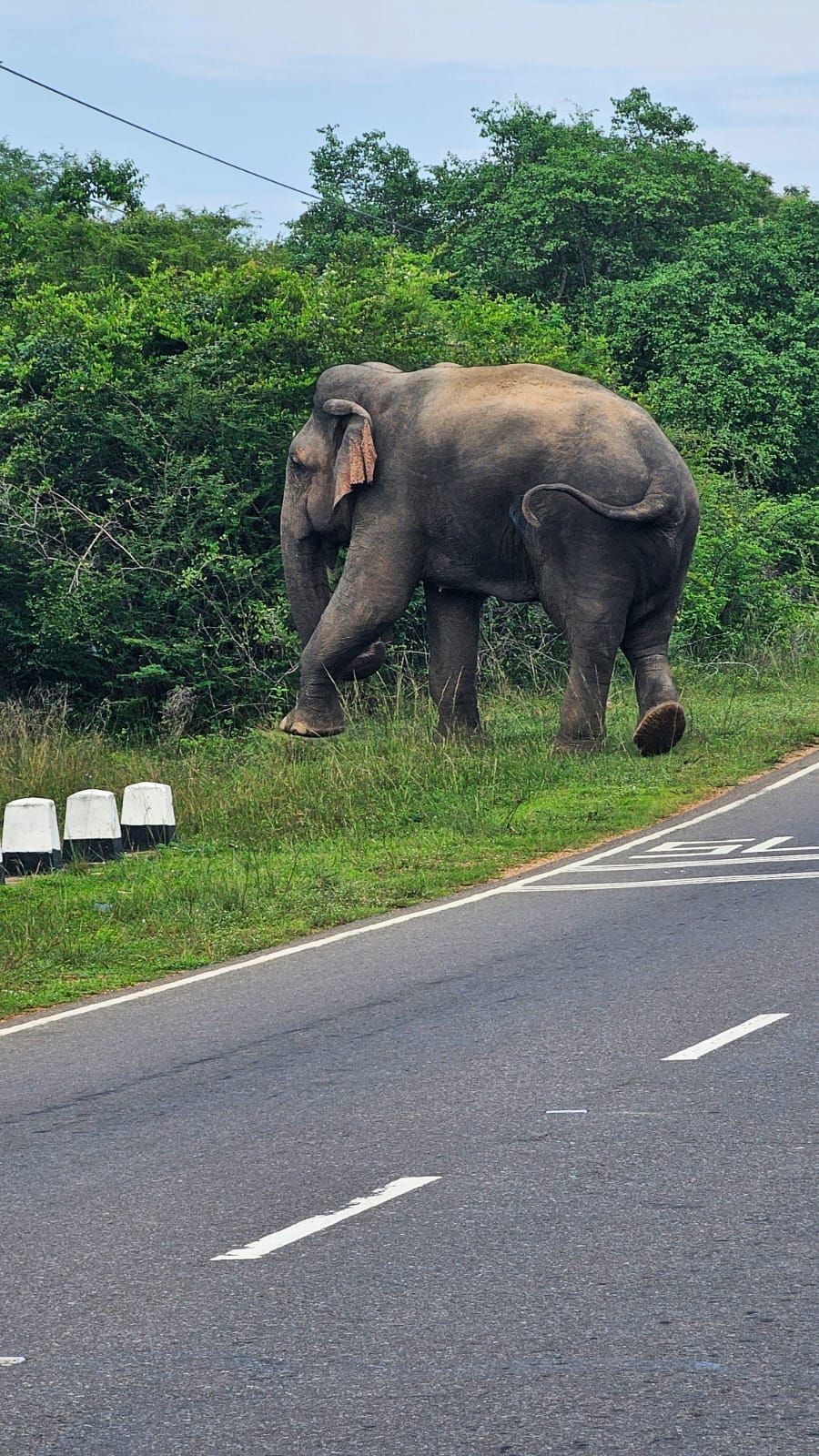
That distinction becomes especially important in elephant country.
Across much of Sri Lanka’s dry zone, wildlife movement, agriculture, transport, tourism, and local communities occupy the same landscape. In these environments, responsible tourism is no longer simply a hospitality consideration. It is an operational one.
The reality is often less romantic than international marketing suggests.
Elephant country is not a controlled safari environment. It is a living landscape shaped by weather patterns, water availability, cultivation cycles, human activity, and constantly changing animal behaviour. Conditions can change quickly. Areas that appear quiet during daylight hours may become active wildlife corridors after dusk. Routes that are suitable one week may require caution the next, particularly during dry periods, heavy rain, or harvesting seasons.
Experienced operators learn to respect this variability.
They understand that safe and responsible movement through these environments depends less on performance and more on observation, timing, communication, and restraint. Noise discipline matters. Vehicle pressure matters. Route selection matters. Equally important is understanding when not to move at all.
Some of the most important decisions in elephant country are the ones guests never notice.
A route is adjusted before departure. An activity starts earlier than planned. A section of ground is avoided altogether. To the guest, the experience may appear unchanged. In reality, those decisions often reflect changing conditions on the landscape and the judgment of people paying attention to them.
The difference between a responsible operation and an irresponsible one rarely begins with a major incident.
More often, it begins with small compromises.
A convoy pushes too close to an animal for photographs. A vehicle blocks a movement corridor for convenience. Lighting becomes excessive. Engines remain running unnecessarily near wildlife. Timings stretch later into the evening because guests want one last sighting. Informal shortcuts become accepted because they save time.
None of these decisions appear particularly significant in isolation.
Over time, however, repeated operational pressure changes the character of the environment itself.
This is where disciplined management becomes important.
The strongest operators in elephant country are often the least theatrical. Their systems are designed not around maximum exposure, but around controlled movement, environmental awareness, and reducing unnecessary pressure on both terrain and wildlife.
Good operations are usually quieter than people expect.
Routes are adjusted early. Distances are maintained. Movement is paced deliberately. Staff communicate continuously. Local conditions are monitored closely. Guests are briefed properly before entering sensitive areas rather than managed reactively once problems emerge.
Much of the work that keeps people safe and landscapes stable happens long before guests become aware of it.
Sri Lanka does not need to compete by offering greater access, more vehicles, or increasingly intrusive encounters with wildlife. Its advantage may lie in experiences that are carefully managed, environmentally aware, and grounded in professional judgment.
Tourism works best when the landscape is treated as more than a backdrop. It is an active environment with limits, rhythms, and consequences that must be understood and respected if these experiences are to remain viable over the long term.
For those operating in elephant country, responsibility is not an abstract environmental slogan. It influences daily decisions. It shapes movement, timing, infrastructure, and how people enter and leave a landscape without gradually degrading the very conditions that make the experience worthwhile.
As Sri Lanka continues to evolve as a destination, this distinction may become increasingly important.
Because in elephant country, access is not the resource. The landscape is.
The operators who understand that distinction are often the ones most likely to preserve it.
About the Author
Alfie Ameer is the founder of Vonfidel Ranch and Cognisive, part of the Vonfidel Group. His work focuses on ethical equestrian tourism, rural movement systems, operational planning, and experience-led tourism development in Sri Lanka.
This article examines operational responsibility, environmental awareness, and movement discipline within Sri Lanka’s elephant country and evolving experiential tourism landscape.
Originally published by Cognisive, part of the Vonfidel Group, with a focus on systems, environmental awareness, field conditions, and applied operational thinking.